


Kalshi pushes investors for US$40 billion valuation but regulators have other plans

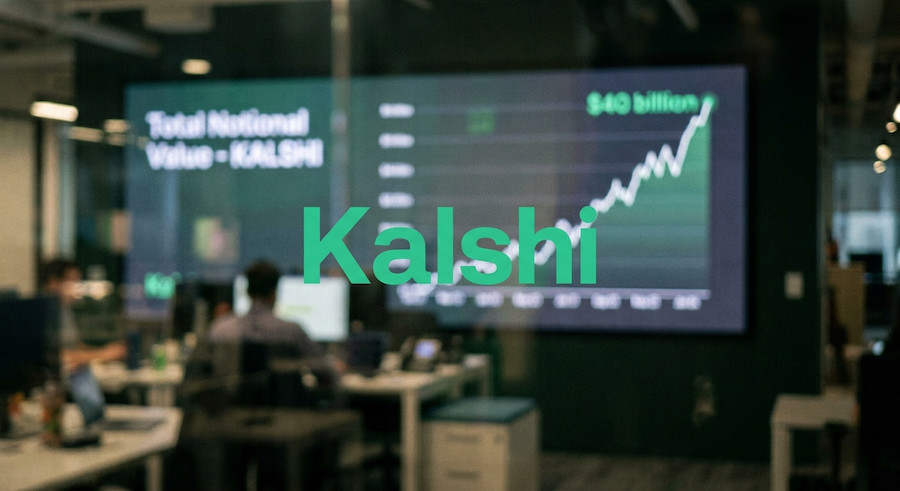
In the last week, prediction market operator Kalshi has faced back-to-back regulatory setbacks across multiple states as the company holds funding round talks with investors to raise its valuation to US$40 billion.
On Thursday, Kalshi was hit with a final order from a King County Superior Court Judge to cease the majority of its operations in the state of Washington, including markets on sports, elections, politics, entertainment, culture, tech, science, and any markets that mention Washington. The decision came after it was found that Kalshi most likely violated the state’s Gambling Act and its Consumer Protection Act.

Kalshi is now expected to implement an IP- and residency-based geofence by 19 August to prevent Washington residents from trading in specific contracts, and a multi-state geofencing solution by 2 September.
On the same day, Kalshi and its rival, Polymarket, also face a lawsuit from Baltimore City, accusing the companies of offering illegal sports betting and failing to comply with Maryland gambling laws.
The suit seeks an order from a judge that would halt both from accepting wagers from city residents and allow Baltimore to impose civil penalties, allow player restitution, and enable the return of profits after violations.

Earlier in the week, Federal Judge Vernon Oliver also rejected a Kalshi injunction that would have allowed it to block regulations imposed by Connecticut’s Department of Consumer Protection. Oliver argued that it would have been unlikely that Kalshi would have been able to convince a court that Connecticut lacked the authority to regulate the company’s sports-event contracts.
A spokesperson for Connecticut Governor Ned Lamont, Cathryn Vaulman, said the state had the right to enforce its gambling laws and protect consumers. “Kalshi has tried to dress up its unregulated gambling as something else entirely, but Connecticut and the court are not buying it,” she added.
All this comes as Kalshi is currently in talks with investment firms Sequoia Capital and Wellington Management for a US$750 million funding round that would put its valuation at US$40 billion, according to reporting by The Information.
Charlotte Capewell brings her passion for storytelling and expertise in writing, researching, and the gambling industry to every article she writes. Her specialties include the US gambling industry, regulator legislation, igaming, and more.

Dig Deeper
Related stories
 2026/03/23: Kalshi valuation surges to US$22 billion after recent funding round
 2025/10/13: Kalshi hits US$5 billion valuation after latest financing round
 2026/08/11: Connecticut court denies appeal by Kalshi against enforcement of state sports wagering laws
2026/01/22: Native American tribes say prediction markets siphon tribal casino money
2026/08/11: Connecticut court denies appeal by Kalshi against enforcement of state sports wagering laws
2026/01/22: Native American tribes say prediction markets siphon tribal casino money
2026/03/23: Kalshi valuation surges to US$22 billion after recent funding round
2025/10/13: Kalshi hits US$5 billion valuation after latest financing round
2026/08/11: Connecticut court denies appeal by Kalshi against enforcement of state sports wagering laws
2026/01/22: Native American tribes say prediction markets siphon tribal casino money
The Backstory
State-by-state pressure tests a federal model
Kalshi’s push for a far higher valuation is colliding with a basic question that has followed prediction markets into the mainstream: whether sports-linked event contracts are federally regulated financial products or state-regulated gambling. The answer is no longer theoretical. Courts and regulators in Washington, Connecticut, Nevada, Maryland and Arizona have moved against the company or its contracts, creating a fragmented enforcement map just as investors weigh how much legal risk is embedded in one of the fastest-growing consumer trading businesses in the U.S.
The current squeeze reflects a sharp reversal from the sector’s recent momentum. Kalshi has argued that its event contracts fall under federal commodities law and Commodity Futures Trading Commission oversight. State officials counter that contracts tied to game outcomes or in-game events operate like sports wagers and should comply with local gambling rules, licensing requirements and consumer-protection regimes. That distinction matters because state gaming laws can impose market-by-market restrictions, geofencing, penalties and in some cases criminal exposure.
The stakes are magnified by Kalshi’s investor narrative. Prediction markets have attracted institutional backers by pitching a regulated, liquid market for trading on real-world outcomes. But state actions now threaten to narrow access to the most commercially appealing category: sports. If courts continue to let states enforce gambling laws, Kalshi could face a patchwork of exclusions that weakens its national product and complicates projections underpinning multibillion-dollar valuations.
Funding surge outpaced legal certainty
Kalshi’s legal confrontation has developed alongside a dramatic repricing of the company. In October, the company raised US$300 million at a US$5 billion valuation, with investors including Sequoia Capital, CapitalG, Coinbase Ventures, Paradigm and Andreessen Horowitz. That round followed a Series C that had valued the company at just more than US$2 billion and came as Kalshi said trading volume was on pace to reach US$50 billion, compared with US$300 million the prior year.
The scale of that growth changed the competitive landscape. Kalshi had overtaken Polymarket in market share, according to Dune data cited at the time, and was positioning itself for international expansion to more than 140 countries. Rival Polymarket also drew major institutional attention after Intercontinental Exchange, the owner of the New York Stock Exchange, made a US$2 billion investment that valued the business at US$8 billion. The message to investors was clear: prediction markets were shifting from niche products to a potential mass-market financial and entertainment category.
That narrative accelerated further when Kalshi’s valuation rose to US$22 billion after a funding round of more than US$1 billion, led by Coatue Management, according to reports. The increase doubled a previous US$11 billion valuation and followed another US$1 billion round involving Paradigm, Sequoia Capital and CapitalG. The Wall Street Journal reported annualized revenue of US$1.5 billion, underscoring why investors may be willing to price the company as a breakout platform despite legal uncertainty.
But the same commercial growth that supports those valuations has sharpened scrutiny. Sports contracts can drive engagement and revenue, yet they also bring Kalshi directly into conflict with state gaming regulators, licensed sportsbooks and tribal gaming interests. The company’s ability to defend a federal preemption theory is therefore central not just to compliance but to whether its revenue base can scale without state-by-state licensing.
Connecticut ruling gave states a road map
Connecticut has become one of the most important battlegrounds because a federal court there rejected Kalshi’s effort to block state enforcement. The U.S. District Court of Connecticut denied Kalshi’s motion for a preliminary injunction, allowing regulators to proceed under state gambling laws. Judge Vernon D. Oliver found that the sports-event contracts at issue did not meet the statutory definition of swaps under the Commodity Exchange Act because they depended on outcomes or discrete occurrences within games rather than whether an underlying event occurred or failed to occur.
The ruling was significant because it challenged the foundation of Kalshi’s defense. The court was not persuaded that Congress had clearly displaced Connecticut’s traditional authority over sports wagering or placed that authority exclusively with the CFTC. It also weighed consumer and state interests against harm to Kalshi users, noting that Kalshi had been on notice about potential enforcement since it began offering the contracts.
That reasoning gives other states a template. If sports outcome contracts are treated as wagers rather than swaps, regulators can argue that prediction market operators cannot bypass licensing systems by listing products on federally registered platforms. Connecticut’s position also came after the state issued cease-and-desist orders to Kalshi, Robinhood and Crypto.com over sports event contracts, signaling that regulators are looking beyond one operator and toward the structure of the product category.
Tribal interests raise the political stakes
Kalshi’s fight is not limited to state agencies. Tribal gaming interests have also entered the debate, arguing that sports-linked prediction contracts threaten revenue streams protected by gaming compacts and federal Indian gaming law. The Indian Gaming Association and 16 federally recognized tribes filed a brief supporting Connecticut’s regulator, contending that operators such as Kalshi divert money from tribal casinos by offering sports-linked products without tribal consent.
That intervention followed similar claims from California tribes and reflects a broader concern that prediction markets could undermine negotiated gaming frameworks. Tribal casinos often depend on exclusivity rights or revenue-sharing arrangements with states. If prediction market operators can offer sports exposure nationwide without state or tribal approval, tribes argue the model weakens the economic bargain underlying those compacts.
The dispute adds political force to the legal battle. Tribal gaming has deep relationships with state governments and Congress, and opposition from Native American groups could complicate efforts by prediction platforms to normalize sports contracts. The tribal argument also reframes the issue from a narrow federal commodities question into a broader fight over who is entitled to profit from legalized sports wagering. As Native American tribes argued in court filings, the rise of prediction markets may shift gaming dollars away from regulated casinos and into platforms that do not operate under the same compact obligations.
Nevada showed enforcement can bite quickly
Nevada’s action illustrated how rapidly state enforcement can force operational changes. Kalshi agreed to stop offering sports and other prohibited event contracts in Nevada under a joint stipulation with the Nevada Gaming Control Board after a state-filed order held the company in contempt for violating an earlier geofencing requirement. The agreement required Kalshi to implement geofencing through GeoComply by Aug. 12, with potential penalties of $120,000 per day for noncompliance.
Kalshi did not concede that the trades justified a contempt order and reserved its defenses. Even so, the Nevada agreement showed that legal disputes can translate into concrete product restrictions. For a platform built on liquidity and broad user access, geofencing can reduce market depth, complicate compliance operations and create inconsistent customer experiences across states.
The Nevada case also showed regulators’ willingness to use established gaming enforcement tools against prediction markets. Nevada officials said the agreement would safeguard gaming in the state and noted broader action against unlicensed prediction markets. That matters because Nevada’s regulatory posture often carries influence in gaming policy. If other jurisdictions follow, Kalshi could be forced into a defensive operating model even before appellate courts resolve the underlying federalism dispute.
Valuation now depends on legal outcomes
The tension between investor enthusiasm and regulatory resistance is now the central backstory. Kalshi’s reported talks for a US$40 billion valuation suggest investors see prediction markets as a category that could expand beyond elections and finance into sports, culture, technology and entertainment. Yet each enforcement win by a state narrows the practical reach of that thesis, especially if sports contracts remain the highest-volume use case.
The legal fight also affects rivals. Polymarket, Crypto.com, Robinhood and other platforms are watching whether courts endorse state authority or protect event contracts under federal market regulation. A state-friendly outcome could push operators toward licensing, product withdrawals or more selective geofencing. A Kalshi victory, by contrast, could accelerate investment and deepen competition with sportsbooks, exchanges and gaming companies.
For now, the company is trying to raise capital from a position of extraordinary growth while defending a business model under attack. That combination creates a valuation paradox: the same products that have made Kalshi more valuable have invited the regulatory actions that could constrain its future. Investors weighing the next round are not just underwriting revenue growth. They are betting on how courts define the boundary between trading and gambling in the U.S.
