


Kalshi and Coinbase blocked in Taiwan over suspected election betting

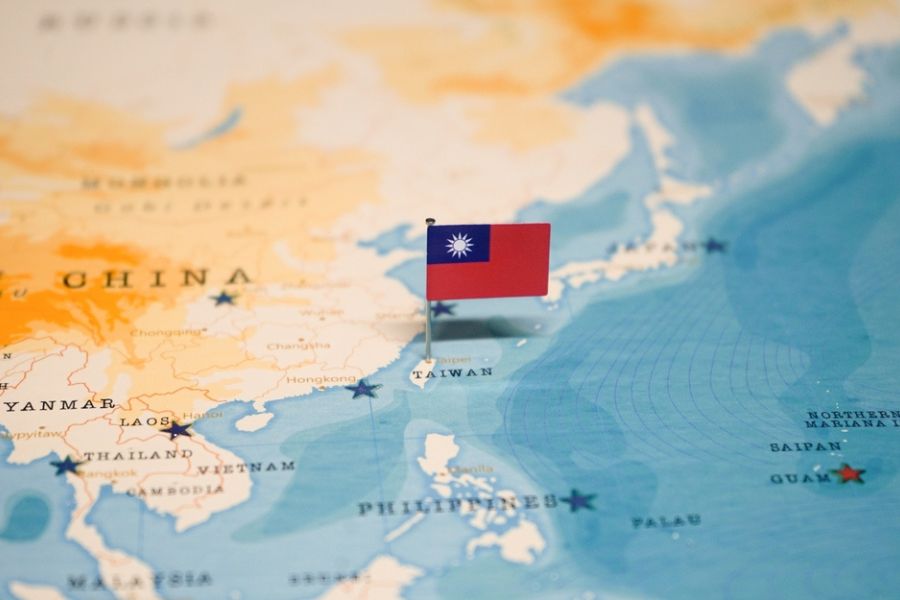
Taiwanese authorities have restricted access to cryptocurrency exchange Coinbase and prediction market platform Kalshi over suspected breaches of election betting laws ahead of local elections on 28 November.
According to a ruling reviewed by Bloomberg, the Criminal Investigation Bureau obtained a court order authorizing the restrictions, suspecting the platforms of violating the Public Officials Election and Recall Act, which bans operating gambling for profit based on election and recall outcomes.

The bureau said the action was intended to protect election integrity and stop foreign interference. The court order authorizes the country’s communications regulator and internet registry to block access to the websites.
Some Coinbase users in Taiwan began reporting access problems from 14 October. The financial technology company said it was investigating the issue, whereas Kalshi stated that it does not permit trading in Taiwan.
The restrictions follow Taiwan’s earlier block on Polymarket, while Polymarket has faced restrictions elsewhere in Asia, including a block in Indonesia and a regulatory review in South Korea.

Under amendments to the country’s Election Act, introduced in 2023, individuals found to have placed illegal election bets can face up to six months in prison, while gambling operators face sentences of up to five years.
These restrictions come amid wider regulatory disputes over prediction markets in the US, where authorities debate whether event contracts should be treated as gambling or financial products.
Kalshi’s CEO, Tarek Mansour, recently reportedly argued that state-level regulation could force the industry to move overseas, while several state authorities contend that some event contracts should be subject to existing gambling legislation.
Charlotte Capewell brings her passion for storytelling and expertise in writing, researching, and the gambling industry to every article she writes. Her specialties include the US gambling industry, regulator legislation, igaming, and more.

Dig Deeper
Related stories
 2026/09/03: Taiwan Sports Lottery takes US$282 million in bets during World Cup
 2026/02/20: Korean baseball players face police complaint over illegal online gambling in Taiwan
 2026/10/13: Most Americans oppose betting on elections: Reuters/Ipsos poll
 2026/01/29: Coinbase launches new Kalshi-powered prediction markets in the US
2026/09/03: Taiwan Sports Lottery takes US$282 million in bets during World Cup
2026/02/20: Korean baseball players face police complaint over illegal online gambling in Taiwan
2026/10/13: Most Americans oppose betting on elections: Reuters/Ipsos poll
2026/01/29: Coinbase launches new Kalshi-powered prediction markets in the US
The Backstory
Taiwan’s block lands at the intersection of elections, crypto and betting
Taiwan’s move to restrict access to Coinbase and Kalshi ahead of local elections reflects a broader collision between prediction markets and gambling law, one that has increasingly drawn in cryptocurrency platforms, sports wagering operators and election regulators. The immediate concern is narrow: authorities suspect the platforms may have facilitated or enabled betting tied to election outcomes, a category Taiwan explicitly moved to criminalize more aggressively after amendments to its election law in 2023.
But the decision also shows how quickly prediction markets have moved from a niche financial technology product into a regulatory flashpoint. Kalshi positions itself as an event-contract exchange, not a sportsbook. Coinbase’s involvement adds another layer, because it gives a mass-market crypto platform a role in distributing products that can resemble wagers to gambling regulators while being treated as derivatives by some financial authorities. That tension is now playing out across jurisdictions, with Taiwan joining a growing list of governments scrutinizing whether these markets threaten election integrity, evade gambling rules or both.
A legal betting market coexists with strict election controls
Taiwan is not hostile to all wagering. It has an established legal sports betting system, and demand has grown rapidly as more activity has moved online. During the 2026 FIFA World Cup, Taiwan Sports Lottery took NT$8.93 billion, or about US$282 million, in bets, with digital wagers surpassing retail betting during a World Cup for the first time. The company’s online customer base rose from more than 400,000 to 680,000 during the tournament, underscoring how comfortable consumers have become with online betting channels.
That growth makes the government’s position more targeted than moralistic. Licensed sports wagering operates within a state-controlled framework, while election betting is treated as a threat to democratic processes. Taiwan’s Public Officials Election and Recall Act bars gambling for profit based on election and recall results, and the penalties are significant. Individuals who place illegal election bets can face up to six months in prison, while operators can face up to five years.
The distinction is important. Taiwan’s regulated sports betting market shows authorities are willing to permit wagering when they can control the product, tax or direct proceeds and monitor operators. Election markets are different because they may create incentives to manipulate information, spread disinformation or profit from political disruption. That concern becomes sharper when platforms are foreign-based, crypto-linked or accessible online despite lacking local approval.
Enforcement has already focused on cross-border and online activity
The Coinbase and Kalshi restrictions follow a pattern of Taiwanese enforcement aimed at online gambling channels and payment networks, especially where activity crosses borders or involves unauthorized platforms. Prosecutors earlier arrested 35 people over an alleged NT$30.6 billion money-laundering scheme tied to illegal gaming proceeds, highlighting concern that online wagering can be paired with payment processing systems to move large sums outside normal oversight.
The issue has also surfaced in sports. Four Lotte Giants baseball players became the subject of a police complaint after they were found entering a Taiwan online gambling venue during a visit. The case was complicated: local reporting later said the venue was licensed by Taiwanese authorities, but officials noted punishable conduct could still arise if illegal online gambling occurred. The episode, detailed in coverage of Korean baseball players facing a police complaint over alleged online gambling in Taiwan, showed how sensitive the line can be between permitted venues and prohibited betting conduct.
Those earlier cases help explain the current response. Regulators are not merely asking whether a company calls itself an exchange or a gambling operator. They are looking at access, activity and potential consequences. If users in Taiwan can enter contracts tied to election outcomes, authorities may treat that as election betting regardless of whether the product is framed as a financial market, a prediction tool or a peer-to-peer trade.
Coinbase and Kalshi expanded as U.S. rules remained contested
The Taiwan action comes shortly after Coinbase expanded deeper into event contracts through its partnership with Kalshi. In the United States, Coinbase launched a Kalshi-powered prediction market for customers nationwide, giving users access to event contracts covering sports, politics and culture. The companies have leaned on Kalshi’s status as a Commodity Futures Trading Commission-regulated exchange, arguing that event contracts should fall under federal commodities oversight rather than state gambling law.
That argument has not settled the matter. State regulators and attorneys general have pushed back, particularly where contracts involve sports or elections. New York Attorney General Letitia James sued Coinbase Financial Markets and Gemini Titan, alleging their event-based products amounted to illegal gambling and that the companies were avoiding state gambling rules by describing the offerings as contracts. In that case, New York’s lawsuit against Coinbase and Gemini Titan over prediction markets sought penalties, profit forfeiture and compliance with state licensing requirements.
Coinbase has framed the issue differently. Its legal executives have argued that federally regulated prediction markets should not be subject to a patchwork of state gambling regimes. Coinbase Chief Executive Brian Armstrong also promoted the product publicly, writing on X that prediction markets are “the ultimate form of truth-seeking,” according to the company’s launch coverage. The post is available at Armstrong’s X account.
That rhetoric helps explain why election officials are wary. Prediction market advocates say market prices aggregate information better than polls or punditry. Regulators counter that election-related contracts may reward manipulation, encourage insider abuse or create financial motives around political outcomes. Taiwan’s decision suggests that when election law is explicit, the “truth-seeking” argument may carry little weight.
Public skepticism gives regulators political cover
Public opinion in the United States has also weakened the industry’s case that election markets are ready for mainstream acceptance. A Reuters/Ipsos survey found that most Americans oppose betting on election results, with 60% of respondents against the practice and only 13% in support. Opposition crossed party lines, including 61% of Republicans and 70% of Democrats.
The poll matters beyond the U.S. because prediction markets often rely on a legitimacy argument: that they produce useful public signals and should be treated differently from gambling. If voters broadly view election markets as betting rather than information infrastructure, regulators have more political room to restrict them. That is especially true in countries such as Taiwan, where concerns over foreign interference are central to election security policy.
Polymarket’s 2024 surge illustrated both the scale of demand and the source of concern. The platform saw billions of dollars traded on the U.S. presidential election, prompting lawmakers to focus on insider trading, market manipulation and political interference. Taiwan had already blocked Polymarket, while other Asian jurisdictions, including Indonesia and South Korea, have taken restrictive or review-based approaches. The Coinbase and Kalshi action therefore fits into a regional pattern rather than standing as an isolated intervention.
The stakes extend beyond one election cycle
The immediate consequence is access disruption for users in Taiwan, including Coinbase customers who reported problems before the court order became public. The broader stakes are larger. If more jurisdictions treat prediction markets as gambling when they touch elections, platforms may be forced to geofence aggressively, delist political contracts or seek gambling licenses they have long argued are unnecessary. That could undermine the industry’s growth model, which depends on liquidity, broad participation and cross-market scale.
For Taiwan, the issue is also about asserting control over digital platforms before election day. A court-backed website block signals that authorities are willing to use internet infrastructure, communications regulators and registry powers to enforce election law. The approach may draw criticism from industry advocates, but it reflects a calculation that election integrity risks outweigh the commercial interests of foreign platforms.
The dispute leaves prediction markets in an unresolved category. They can look like financial exchanges to federal commodities regulators, gambling products to state or national gaming authorities and election risks to governments preparing for votes. Coinbase and Kalshi are now at the center of that ambiguity. Taiwan’s action shows that outside the U.S., the debate may be resolved less through lengthy jurisdictional battles and more through direct restrictions when elections are at stake.
