
Icasino money used to inflate Drake streaming numbers, lawsuit claims

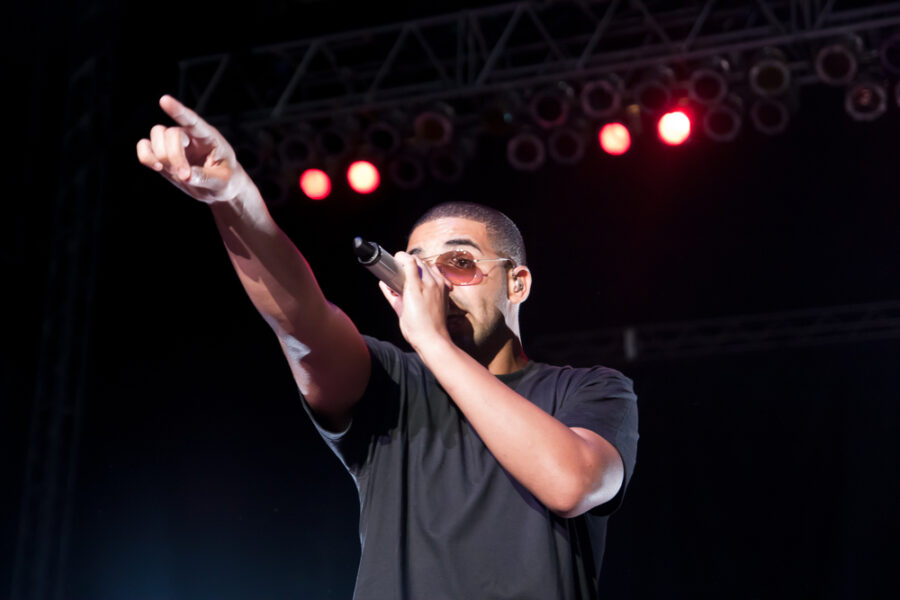
A class-action lawsuit filed in federal court in Virginia alleges Canadian rapper Drake, online streamer Adin Ross, and an Australian national used money linked to an icasino to artificially boost streaming figures for Drake’s music catalog.
Brought by two Virginia residents, the complaint accused the defendants of promoting real-money gambling on the icasino site Stake.us as part of a racketeering conspiracy. The plaintiffs claimed the activity exposed consumers to gambling harm while funding fraudulent streaming activity.

The defendants acted as paid promoters for Stake, with the lawsuit alleging the plaintiffs were influenced to gamble after viewing Drake’s livestreamed betting content and giveaways tied to the platform.
The complaint alleged that the defendants used Stake’s tipping feature to transfer money directly to themselves, which the plaintiffs claimed were used to fund automated bots, streaming farms, and coordinated amplification campaigns on major music platforms.
The Australian man, identified as George Nguyen, was described as an operational facilitator who allegedly received cryptocurrency through Stake channels and coordinated social media clipping and narrative-boosting campaigns.
The lawsuit sought to represent Virginia residents who lost wagers using Stake Cash within the past three years. It alleges violations of the Virginia Consumer Protection Act and the federal Racketeer Influenced and Corrupt Organizations Act.
The case followed a similar class-action lawsuit filed in Missouri last year, which challenged Stake.us’ dual-currency model, described by critics as a regulatory loophole for real-money gambling.
Abi Bray brings strong researching skills to the forefront of all of her writing, whether it’s the newest slots, industry trends or the ever changing legislation across the U.S, Asia and Australia, she maintains a keen eye for detail and a passion for reporting.

Verticals:
Sectors:
Topics:
Dig Deeper
Related stories
 2025/10/28: Missouri lawsuit targets Stake.us alongside Drake and Adin Ross
2025/10/08: Aristocrat Leisure to acquire live slot streaming provider Awager
2025/06/25: Florida moves to dismiss lawsuit challenging Seminole Tribe’s claim to online sports betting
2025/01/16: Former mayor Alice Guo accused of gambling-related money laundering in the Philippines
2025/10/28: Missouri lawsuit targets Stake.us alongside Drake and Adin Ross
2025/10/08: Aristocrat Leisure to acquire live slot streaming provider Awager
2025/06/25: Florida moves to dismiss lawsuit challenging Seminole Tribe’s claim to online sports betting
2025/01/16: Former mayor Alice Guo accused of gambling-related money laundering in the Philippines
 2025/10/28: Missouri lawsuit targets Stake.us alongside Drake and Adin Ross
 2025/10/08: Aristocrat Leisure to acquire live slot streaming provider Awager
 2025/06/25: Florida moves to dismiss lawsuit challenging Seminole Tribe’s claim to online sports betting
 2025/01/16: Former mayor Alice Guo accused of gambling-related money laundering in the Philippines
The Backstory
Why the allegations landed now
The complaint in Virginia arrives at a moment when the lines between gambling promotion, music marketing and livestream culture have blurred. Influencers and artists have embraced real-time betting as content, while sweepstakes casinos push a dual-currency model that looks like entertainment but can function as wagering. That overlap has already sparked litigation and enforcement efforts in several states. The Virginia filing echoes a pattern taking shape elsewhere, alleging that paid promotion of a sweepstakes casino induced play while masking the true risks and mechanics behind the product.
In Missouri, a Jackson County suit challenged Stake.us for allegedly operating an illegal online casino behind a two-token system that granted players cash-like credits when they bought virtual coins. The complaint also named high-profile promoters and argued that viewers were misled about how bankrolls were funded on streams. The filing claims Stake.us used a disguised pathway to real-money gambling and seeks a halt to the practice along with restitution for residents who lost money. Read more in our coverage of the Missouri lawsuit targeting Stake.us and its celebrity promoters.
The Virginia case adds a new layer by alleging that money linked to an icasino was recycled to boost music streaming metrics, describing a coordinated effort of bot farms and social amplification. Taken together, the suits present a broader concern: that gambling-fueled influencer content can be leveraged not only to grow player spend but to shape narratives and consumption across platforms far beyond casinos.
The sweepstakes casino playbook under scrutiny
Stake.us and similar sweepstakes models have positioned themselves as compliant alternatives to traditional online casinos by separating play into noncash coins and redeemable credits. Plaintiffs in Missouri argue that structure is a legal fig leaf. According to that complaint, every dollar spent on virtual coins yields an equivalent amount of a separate currency that can be used on casino-style games and later redeemed for cash, which would put the operation in the realm of unlicensed gambling. The suit seeks class status for five years of losses and asks a judge to bar the system.
California regulators have also sought to curtail sweepstakes-style gambling operators, testing how far these models can stretch under state law. While outcomes vary, the momentum points to heightened skepticism from courts and enforcers about dual-currency designs marketed as entertainment. The Virginia case leans on that climate, arguing that promotional streams and giveaways were not mere advertising but the front end of a system that captured consumer spend and allegedly funded separate manipulation of music metrics.
Influencer streams face a trust test
The lawsuits have put a spotlight on the economics of gambling content. The Missouri case cites allegations that influencers played with “house money,” eroding audience trust when viewers assume creators are risking their own funds. That theme runs through a wider debate about disclosure, incentives and the duty to avoid harm in promotional streams. If courts accept arguments that viewers were misled about risk and the source of funds, the result could be tighter standards for sponsored gambling content and more explicit rules on how streamers present bankrolls, bonuses and redemption policies.
The industry is already experimenting with guardrails. In the Philippines, YGS Live has positioned itself as a “brand-safe” network for gaming broadcasts and has partnered with Buenas PH to make responsibility part of its pitch. The collaboration includes a televised competition series culminating at City of Dreams Manila on Jan. 18, 2026, with clear ties to licensed operators and pledges to avoid unregulated sites. See details in our report on Buenas PH’s partnership with YGS Live for a regulated streaming showcase. While the legal context differs from the United States, the message is broadly relevant: organizers see reputational risk in blurred sponsorships and are trying to differentiate with compliance and transparency.
Streaming meets casinos in new distribution deals
At the same time, legacy suppliers are moving toward the stream-first future. Aristocrat Leisure agreed to acquire live slot streaming provider Awager alongside funds managed by Oaktree, betting that interactive broadcasts will be a core distribution channel for casino content. Awager builds live experiences and distributes third-party games through digital layers that let audiences watch and engage in real time. For Aristocrat, which straddles land-based, social and real-money online segments, the deal extends its reach into creator-led environments where audience attention is shifting. Read more about Aristocrat’s move to buy Awager and expand into live slot streaming.
This convergence raises the stakes for regulatory clarity. When the content, commerce and wagering mechanics sit inside the same stream, questions about age gating, disclosures, geographic controls and cash-out pathways become inseparable from entertainment. The Virginia allegations about streaming farms underscore how distribution power in these channels can be repurposed, blending marketing, monetization and manipulation if guardrails fail.
Policy pressure builds from taxes to integrity
Washington is also reshaping the risk calculus. A federal change that caps the deduction of gambling losses against winnings at 90% could pinch high-volume bettors and spur new lobbying. In Arkansas, a BetSaracen executive argued most casual players would not notice, but the operator still backs a bill to restore the full deduction. The push reflects a broader industry playbook: emphasize consumer-level effects while working to loosen tax burdens that affect whales and the platforms that serve them. Our coverage breaks down why BetSaracen says the federal tax rule will spare casual bettors but still fuels a legislative fight.
Integrity concerns in pro sports are amplifying the political noise. After an NBA lifetime ban tied to prop betting, more players have come under investigation, and current pros warn that the temptations around wagers and insider influence are spreading. Brooklyn Nets forward Michael Porter Jr. said the league’s betting problem is getting worse, describing how financial pressures can warp incentives on and off the court. Those headlines are not directly about sweepstakes casinos or music streams, but they contribute to a climate where lawmakers question whether marketing and product design are outpacing safeguards. See our report on NBA players’ warnings that the betting problem is deepening.
The stakes for platforms, creators and labels
The Virginia complaint ties these threads together: a sweepstakes casino model under legal fire, high-visibility influencer marketing, and the alleged reuse of gambling-linked funds to engineer cultural impact through music streams. If courts see a racketeering pattern, the consequences could be sweeping. Platforms could face tighter rules on dual-currency flows and cash-out mechanics. Creators could be held to stricter disclosure and suitability standards. Labels and artists could confront audits of promotion spend that touches gray-market or high-risk channels.
The industry’s response will likely mix compliance signaling and consolidation. Deals like Aristocrat–Awager suggest large suppliers plan to professionalize live gambling content within regulated frameworks. Regional efforts like the YGS Live series aim to codify ethical norms on stream. But the litigation trend shows regulators and plaintiffs are moving faster too. For companies relying on creator-driven growth, the message is clear: in an era when streams can sell wagers, shape charts and sway public markets, the burden to prove transparency and accountability is rising.

