


House committee advances bill to restore gambling loss deduction

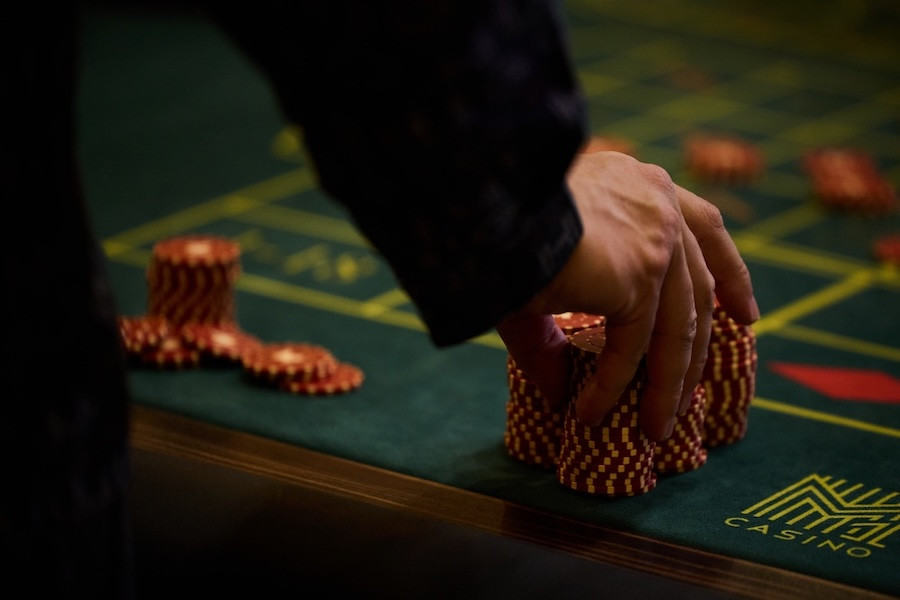
The US House Ways and Means Committee has advanced bipartisan legislation that would restore the full federal tax deduction for gambling losses.
The Full House Act, introduced by Rep. Steven Horsford of Nevada, would reverse a change that had reduced the deduction to 90% of losses. It passed the committee by 38 votes to five on 16 September and will now proceed through the House legislative process.

Under the current rules, gamblers can deduct losses against gambling winnings, but the deduction is limited to 90% of losses. That effectively means that a player whose gambling losses match their winnings could still have taxable income despite making no net gambling profit.
Horsford said the measure was intended to address the resulting tax liability, with particular implications for Nevada, where gaming is a major part of the tourism economy.
The legislation has received support from gambling industry groups and casino operators.

The Chief Executive Officer of Wynn Resorts, Craig Billings, said the committee vote was an important step toward restoring the deduction, while the President and Chief Executive Officer of the American Gaming Association (AGA), Bill Miller, also backed the legislation.
The AGA has argued that restoring the full deduction could help keep customers in the legal gambling market, where licensed operators are subject to regulatory requirements.
The 90% deduction limit was introduced through the “One Big Beautiful Bill Act,” enacted in 2025. Its effect has been described by Horsford and gambling industry representatives as a “phantom tax” because taxable income can arise even when a gambler’s winnings are offset by losses.

The committee vote was secured after months of negotiation, although the bill must also be considered by the whole House and Senate before it can become law.

Dig Deeper
Related stories


The Backstory
How a tax fix became a gaming priority
The House Ways and Means Committee’s vote to advance the Full House Act marks the most concrete movement yet in a fast-developing fight over how gambling income is taxed in the U.S. The legislation targets a provision in the 2025 One Big Beautiful Bill Act that limited deductible gambling losses to 90% of winnings, ending the long-standing ability of gamblers to offset winnings fully with losses up to the amount won.
For casino states, professional gamblers and legal operators, the issue moved quickly from a technical tax matter to a broader debate over whether federal policy could make regulated gambling less attractive. The concern is simple: A bettor who wins and loses the same amount over a year could still owe federal tax on 10% of the winnings, despite having no net gambling profit. Nevada lawmakers and industry groups labeled that outcome a “phantom tax,” arguing it could distort behavior in a market already competing with offshore sportsbooks, gray-market products and prediction platforms.
The committee vote also shows how gambling policy has become a bipartisan economic issue for Nevada and other states with significant casino, sports betting and tribal gaming interests. Rep. Steven Horsford’s bill is one of several recent attempts by lawmakers to unwind federal measures they say place licensed operators and their customers at a disadvantage.
The backlash began with the budget bill
The dispute can be traced to the passage of President Donald Trump’s tax and spending package, which included the 90% loss-deduction cap. As the change became better understood, gamblers and tax professionals warned it could create taxable income disconnected from actual profit. In an earlier report on how gamblers raised concerns over the tax provision, accountants and industry participants said the measure could erode margins for people who wager frequently, including poker players and high-volume sports bettors.
The reaction was especially sharp because U.S. commercial gaming had been expanding. The American Gaming Association said commercial gaming revenue reached nearly $72 billion in 2024, a fourth consecutive annual record, helped by casinos, online sports betting and digital platforms. That growth made the tax change more consequential: More legal gambling activity meant more people could be exposed to a rule that taxes winnings without fully recognizing offsetting losses.
Professional players were among the first to highlight the potential consequences. Poker player Phil Galfond warned on X that the change could make professional gambling unworkable in the U.S. if taxes exceeded actual profits. That message helped turn a budget provision into a visible industry issue, drawing attention from lawmakers representing Nevada’s gaming economy.
Nevada lawmakers moved first
Rep. Dina Titus, a Las Vegas Democrat, was among the earliest members of Congress to push for a reversal. Her Fair Bet Act sought to restore the full deduction and framed the issue as one of tax fairness for everyone from recreational players to professionals. The measure was co-sponsored by Rep. Ro Khanna of California and became an early legislative response to the gambling tax change.
Titus argued that gamblers should not be taxed on money they did not keep. Her proposal also reflected a recurring Nevada concern: If legal gambling becomes less economically viable, some customers may move to offshore or otherwise unregulated sites that do not report transactions, enforce responsible gambling safeguards or pay the same taxes and fees as licensed operators.
Horsford’s Full House Act now carries that effort further by securing committee approval, a step Titus’ bill had not yet achieved. While both measures seek the same practical result, restoring the 100% deduction, the Ways and Means vote gives the issue a formal path through the House. That does not guarantee enactment. The bill still faces votes in the full House and Senate, where tax legislation often becomes tied to broader fiscal negotiations.
Industry support reflects wider pressure
Casino operators and the AGA have backed efforts to restore the deduction because they view the tax issue as part of a larger competitive landscape. Legal operators already face state taxes, compliance costs, licensing rules, anti-money laundering obligations and responsible gambling requirements. Any federal rule that raises the effective cost of legal play could make illegal or lightly regulated alternatives more appealing.
That argument also appeared in debate over other gaming-related tax measures. In a separate push, Sens. Catherine Cortez Masto of Nevada and Cindy Hyde-Smith of Mississippi reintroduced legislation to repeal the federal sportsbook handle tax, a 0.25% levy on wagers placed with regulated sportsbooks. Supporters said the tax is outdated and gives illegal operators an advantage because they do not pay it.
The handle-tax repeal and the gambling-loss deduction fight are distinct, but they rest on the same policy claim: Federal tax rules should not penalize legal gambling businesses and their customers in ways that strengthen unregulated competitors. Nevada sportsbooks paid almost $22 million in handle taxes in 2022, nearly double their 2019 total, according to supporters of the repeal measure. That cost has become more visible as sports betting expands nationwide and newer competitors seek alternative regulatory paths.
Not every operator expects the deduction change to affect the average bettor. Carlton Saffa, chief market officer at Saracen Casino Resort in Arkansas, said most low-dollar recreational users of BetSaracen likely would not notice the tax shift. Still, as reported in coverage of BetSaracen’s view of the federal gambling tax change, Saracen supported Titus’ repeal effort because even a limited impact on higher-volume bettors could matter to the broader legal market.
Prediction markets sharpened the stakes
The fight over gambling deductions is unfolding alongside a separate but related battle over prediction markets. Platforms such as Kalshi and Polymarket have argued that event contracts fall under the jurisdiction of the Commodity Futures Trading Commission rather than state gambling regulators. Nevada lawmakers, tribes, casino operators and labor groups have pushed back, saying sports and casino-style event contracts function like gambling and should be regulated accordingly.
Horsford and Rep. Mark Amodei introduced the Prediction Markets Are Gambling Act to ban sports event contracts and reaffirm state and tribal authority over gambling regulation. The bill targets contracts based on sports and casino-style games, responding to industry estimates that sports trading accounts for a large share of prediction-market volume.
This matters for the deduction fight because both issues center on where gambling activity migrates when regulation or taxation changes. If legal sportsbooks, casinos and their customers face higher costs, opponents warn that bettors may seek products outside traditional state gaming systems. Prediction markets add urgency to that concern because they present a technology-driven alternative that can resemble sports betting while claiming a different federal framework.
What the committee vote changes
The Ways and Means Committee’s approval does not settle the issue, but it changes the political posture. Before the vote, efforts to restore the full deduction were largely defensive proposals responding to a new tax burden. Now, the Full House Act has demonstrated bipartisan support in the tax-writing committee, giving industry groups and Nevada lawmakers momentum as they press for floor consideration.
The stakes extend beyond professional gamblers. Casinos, sportsbooks and online gaming companies depend on customer confidence that legal play will be taxed in a way that reflects actual economic gains. If bettors believe legal gambling creates tax exposure even when they break even, the regulated market could lose activity to operators that do not follow U.S. reporting rules.
For Nevada, the debate is also about protecting a core tourism and employment engine at a time when lawmakers have warned about softer Las Vegas visitation. For Congress, it is a test of whether a tax provision passed as part of a broad budget bill will be reconsidered after affected industries identify unintended consequences. The Full House Act now gives that reconsideration a vehicle, but its fate will depend on whether lawmakers treat the “phantom tax” as a narrow gambling concern or a broader problem for legal markets.
