


Dallas Cowboys’ owner sees new chance for legal sports betting in Texas after Democratic wins

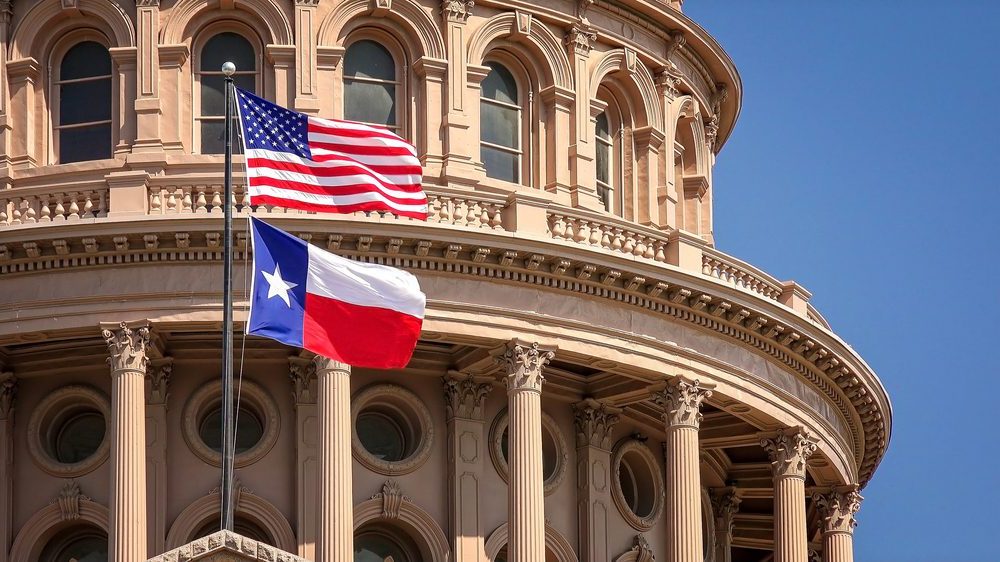
The owner of the NFL team the Dallas Cowboys, Jerry Jones, has said the 2026 midterm results could open a new path to legal sports betting in the US state of Texas, after Democrats won the state’s governor and lieutenant governor races for the first time in decades.
Speaking during his weekly Friday interview on 105.3 The Fan, the NFL team’s flagship radio station, Jones reiterated his support for legalization and suggested that “the new turnover, you might say, in the politics” could help advance the issue.

Democrat Gina Hinojosa defeated incumbent Governor Greg Abbott in the 3 November election, while Democrat Vikki Goodwin unseated Lieutenant Governor Dan Patrick.
Patrick, a longtime gambling opponent, presides over the Texas Senate and has repeatedly blocked sports betting bills from advancing in the chamber.
Texas is one of 11 US states without any form of legal sports betting, but Jones has backed legalization for several years.

In 2021, he said gambling could eventually become common in the state, and in 2024 he said Texas was losing “huge amounts of revenue” by keeping its ban.
Jones noted that his support was driven by the potential benefits to the Cowboys rather than politics, describing himself as “apolitical.”
“I do everything that I can possibly do to make the Cowboys interesting, entertaining, have fans come to the stadium, have people watch us on television. That’s my 99 and nine-tenths percent reason for doing anything,” he added.

Before the election, Jones donated US$250,000 to a joint fundraising committee supporting Texas Attorney General Ken Paxton, who lost his US Senate race to Democrat James Talarico. Jones also recently donated US$10 million to the Clinton Foundation.
Legalization still faces a steep path, with sports betting prohibited under the Texas Constitution.
Any change would require a constitutional amendment approved by two-thirds of both legislative chambers, followed by a public vote.
The issue is expected to return when the Texas Legislature convenes in January 2027, alongside the question of prediction markets.
A Texas Senate committee examined the platforms in September, as lawmakers weighed whether they should be treated as illegal gambling.

Dig Deeper
Related stories
 2025/08/21: Aristocrat Leisure, NFL combine for free-to-play NFL Super Bowl Slots social casino game
 2026/07/06: Australia’s Federal Court fines online poker provider AU$24 million for prohibited services
 2025/01/15: Analyst: Maryland tax hikes would “rattle online sports betting sector”
 2026/06/24: New Zealand’s largest illegal lottery operator sentenced over US$6.2 million operation
2025/08/21: Aristocrat Leisure, NFL combine for free-to-play NFL Super Bowl Slots social casino game
2026/07/06: Australia’s Federal Court fines online poker provider AU$24 million for prohibited services
2025/01/15: Analyst: Maryland tax hikes would “rattle online sports betting sector”
2026/06/24: New Zealand’s largest illegal lottery operator sentenced over US$6.2 million operation
The Backstory
NFL’s gambling ties have moved from taboo to mainstream
Jerry Jones’ renewed optimism about legal sports betting in Texas reflects a broader shift that has been years in the making. The NFL, once among the most cautious major US leagues on gambling, now sits at the center of the country’s sports wagering economy. Its games drive weekly betting volume, its teams have sponsorship ties with operators and its media ecosystem increasingly overlaps with betting content, fantasy products and social gaming.
That transition has reshaped the political case in states that remain closed. Supporters no longer frame wagering only as a consumer freedom issue. They point to fan engagement, mobile entertainment, tax revenue and the risk that offshore or out-of-state platforms are already serving demand without local oversight. Jones has consistently made that argument in Texas, where the Dallas Cowboys are one of the state’s most valuable cultural and commercial assets.
The NFL’s own commercial evolution has reinforced that argument. Aristocrat Leisure’s Product Madness recently launched an NFL-licensed free-to-play social casino game, blending league branding, NFL Players Association content and slot-style entertainment without real-money wagering. The product, promoted with Cowboys defensive lineman Micah Parsons, underscores how deeply gambling-adjacent experiences have entered the football business even in jurisdictions where sports betting remains illegal.
Texas remains the biggest prize outside the legal market
Texas is one of the few states without any form of legal sports betting, making it the most coveted undeveloped market in the US. Its population, pro sports footprint and consumer spending power have long attracted sportsbook operators, casino companies, team owners and lobbyists. But the state’s legal structure makes change difficult. Sports betting is barred under the Texas Constitution, meaning legalization requires approval by two-thirds of both legislative chambers before going to voters.
That high threshold has given opponents significant leverage. Former Lt. Gov. Dan Patrick, who presided over the Senate, repeatedly made clear that gambling expansion would not advance without broad Republican support. Even when the Texas House showed signs of openness to sports betting, the Senate remained the decisive barrier. Jones’ latest comments follow Democratic victories in the races for governor and lieutenant governor, a political turnover that could alter the procedural math when lawmakers return in January 2027.
The stakes are larger than a single bill. Legalization would determine whether Texas joins the regulated national market or continues watching residents travel to neighboring states, use offshore websites or engage with gray-market alternatives. For operators, Texas could be among the largest state launches since the US Supreme Court cleared the way for expanded sports wagering in 2018. For teams such as the Cowboys, legalization could unlock sponsorships, data partnerships, in-stadium activations and new fan engagement tools.
NFL betting demand is already well established
The central reason Texas remains a target is simple: NFL betting is the backbone of the US sportsbook business. Football offers weekly appointment viewing, national broadcasts, fantasy participation and a deep menu of bet types. That creates a predictable surge in wagering from September through the Super Bowl, when sportsbooks acquire customers, promote parlays and compete heavily on mobile products.
Recent consumer research points to the scale of that demand. An Optimove study found that 77% of NFL bettors planned to wager through the season, with regular season games the top draw and 83% planning to bet on the Super Bowl regardless of which teams played. The study also found that 76% of bettors placed wagers through mobile or online platforms, the channel that has defined the post-2018 market.
Those habits matter in Texas. The state is already saturated with NFL content, from the Cowboys’ national following to the Houston Texans’ regional base and the wider college football culture. If legal wagering is approved, operators would not need to create demand from scratch. They would be trying to convert an existing audience into regulated accounts, with taxation, age verification and responsible gambling controls layered onto activity that supporters say is already happening informally.
The same data also highlights the risk side of expansion. Optimove found that while most bettors were aware of responsible gambling resources, 63% said they had spent more than intended or could afford. That finding gives opponents a ready argument and gives regulators a roadmap for safeguards if Texas advances a bill. The debate is therefore likely to turn not only on revenue but on whether lawmakers believe a legal market would better manage existing behavior.
Revenue arguments are rising, but tax policy can cut both ways
Jones has previously argued that Texas is forgoing substantial revenue by prohibiting sports betting. That claim has resonance as states face budget pressures and look for new sources of recurring income. Legal sports betting typically offers governments a politically easier option than broad-based tax increases, especially when voters see neighboring states collecting money from activity their own residents may already be doing.
But the experience of mature markets shows that tax design is critical. Maryland Gov. Wes Moore’s proposal to double the online sports betting tax rate to 30% showed how quickly legalization debates can become budget debates after launch. Analysts warned that the plan would rattle the online sports betting sector, with potential cash-flow hits for major operators including DraftKings, FanDuel owner Flutter Entertainment, BetMGM, ESPN Bet and Caesars Sportsbook.
For Texas, the Maryland fight is a cautionary example. A low tax rate can make legalization more attractive to operators and encourage promotional spending, but it may disappoint lawmakers seeking meaningful revenue. A high rate can generate more public money but reduce market investment, limit odds competitiveness and push some bettors back toward illegal platforms. If Texas lawmakers reopen the issue, they will have to decide whether the goal is maximum revenue, maximum channeling into legal markets or a compromise that can survive a statewide vote.
Illegal and gray markets complicate the political debate
The Texas discussion also intersects with a wider global crackdown on unregulated gambling. Governments in multiple jurisdictions are trying to distinguish legal entertainment products from illegal betting or lottery schemes, especially as digital platforms blur traditional boundaries. That enforcement backdrop strengthens the case for clear rules but also fuels concern among gambling opponents that expansion invites more risk.
In Australia, the Federal Court imposed AU$24.24 million in penalties tied to online poker services the regulator said were prohibited. The case against operators using the PPPfish, Shuffle Gaming and Redraw Poker brands showed how regulators are pursuing platforms that allow players to use virtual chips with real-money value. The ruling, covered in Australia’s Federal Court penalties against an online poker provider, underscored the consequences of operating outside established law.
New Zealand has faced similar issues. Authorities sentenced the owner and director of what officials described as the country’s largest illegal lottery, a NZ$11 million-a-year operation that drew about 70,000 participants. The case, involving prizes such as cars, boats, cash and a house, became part of the policy discussion as New Zealand moves toward a regulated online casino framework. The prosecution of New Zealand’s largest illegal lottery operator illustrates how consumer demand can migrate to unlawful channels when legal options are limited or unclear.
The 2027 session could test whether politics has really shifted
Jones’ comments are significant because they connect a changed political landscape with an issue that had been structurally blocked. A Democratic governor and lieutenant governor could remove one of the main procedural obstacles, but legalization still faces a steep path. A constitutional amendment requires supermajority support, meaning bipartisan backing remains essential. The sports betting coalition will need rural votes, urban votes and a public campaign capable of overcoming moral, social and tribal gaming objections.
The debate may also expand beyond sportsbooks. Texas lawmakers have already examined prediction markets, which let users trade event contracts and have drawn scrutiny over whether they function like gambling. That issue could complicate or accelerate the sports betting conversation by forcing lawmakers to define what types of event-based wagering should be legal, who should regulate them and whether existing constitutional prohibitions apply.
For the Cowboys and other Texas sports franchises, the next legislative session represents a rare opening. For operators, it is a chance to pursue the largest remaining prize in US sports betting. For opponents, it is a moment to argue that political turnover should not override longstanding limits on gambling. The outcome will show whether Texas’ resistance was rooted mainly in leadership control or in a broader legislative reluctance that still has the votes to hold.
