
Congressman urges Commodity Futures Trading Commission to review Kalshi-CNN deal

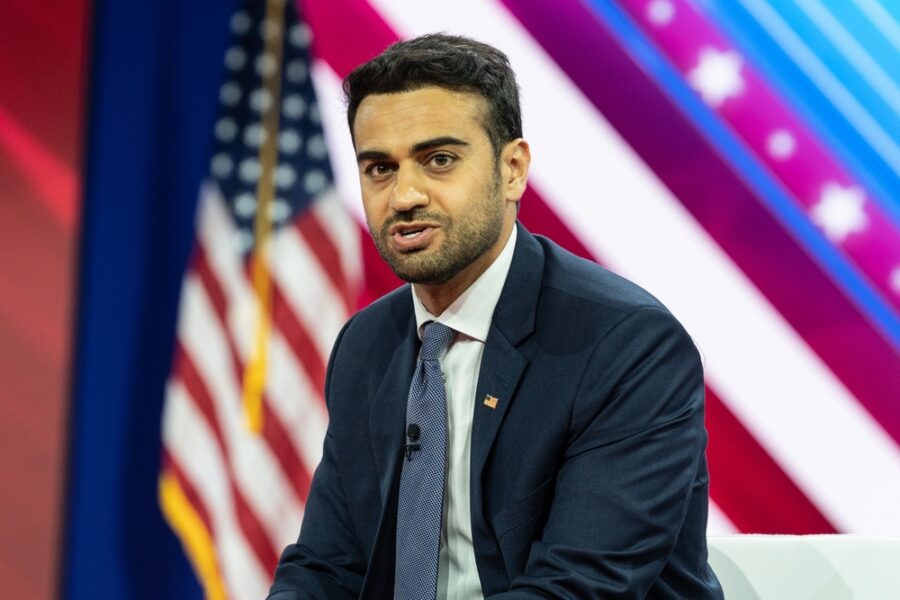
Congressman Abe Hamadeh has called on federal regulators to review the partnership between news broadcaster CNN and prediction market platform Kalshi, warning that the deal posed risks to market integrity and even national security.
In a letter to Commodity Futures Trading Commission Acting Chairwoman Caroline D. Pham, Hamadeh requested details on how the regulator is reviewing the partnership between Kalshi and CNN.
He argued that the arrangement creates a conflict of interest as it allows a major news organization to potentially profit from geopolitical events.
“CNN would be uniquely positioned to shape public perception and news cycles around the very events Kalshi lists as tradable markets,” Hamadeh explained. “These events would involve elections, war, foreign policy crises, and domestic instability. No other major media outlet has attempted such a partnership, and for good reason: it creates a built-in structural conflict of interest that allows an influential news organization or foreign adversaries to shape outcomes for financial or competitive advantage.”
The congressman asked four questions of the Commodity Futures Trading Commission, including whether the regulator is looking at the deal under the federal law on event contracts and whether it had assessed the national security and political influence risks associated with the agreement.

CNN’s partnership with Kalshi comes after another broadcast organization, CNBC, signed a deal with the same company, which will see Kalshi data integrated into regular programming.
Abi Bray brings strong researching skills to the forefront of all of her writing, whether it’s the newest slots, industry trends or the ever changing legislation across the U.S, Asia and Australia, she maintains a keen eye for detail and a passion for reporting.

Verticals:
Sectors:
Topics:
Dig Deeper
Related stories
 2025/06/05: Arizona Gaming Director criticises Commodity Futures Trading Commission
2025/09/30: Sleeper Markets sues Commodity Futures Trading Commission over alleged license interference
2025/11/26: Polymarket gets Commodity Futures Trading Commission approval to launch in the US
2025/09/05: Kristin Johnson departs Commodity Futures Trading Commission with predictions market warning
2025/06/05: Arizona Gaming Director criticises Commodity Futures Trading Commission
2025/09/30: Sleeper Markets sues Commodity Futures Trading Commission over alleged license interference
2025/11/26: Polymarket gets Commodity Futures Trading Commission approval to launch in the US
2025/09/05: Kristin Johnson departs Commodity Futures Trading Commission with predictions market warning
 2025/06/05: Arizona Gaming Director criticises Commodity Futures Trading Commission
 2025/09/30: Sleeper Markets sues Commodity Futures Trading Commission over alleged license interference
 2025/11/26: Polymarket gets Commodity Futures Trading Commission approval to launch in the US
 2025/09/05: Kristin Johnson departs Commodity Futures Trading Commission with predictions market warning
The Backstory
How we got here
Rep. Abe Hamadeh’s call for the Commodity Futures Trading Commission to scrutinize Kalshi’s content partnership with CNN caps months of whiplash in the market for event contracts. The CFTC has toggled between greenlighting expansion, warning of consumer risks and fielding pressure from state and federal officials who disagree on whether prediction markets are financial innovation or gambling by another name. That split has widened as media and Wall Street money edge closer to the space and state enforcers step up oversight.
Hamadeh’s concerns about a media outlet profiting from tradable news events land as the agency faces an increasingly crowded docket: new platforms seeking entry, existing players pushing deeper into mainstream distribution and states asserting their authority. The friction underscores the stakes for market integrity, investor protection and election confidence if large audiences are steered toward trading outcomes tied to politics and policy.
States escalate, calling event contracts gambling
In Arizona, the state’s top gaming regulator has argued the CFTC is letting federally registered entities run afoul of state law. In a pointed letter to Acting Chair Caroline Pham, Arizona Department of Gaming Director Jackie Johnson said event contracts “amount to illegal gambling in Arizona” and criticized what she called lax federal enforcement against offerings that would violate state rules. Her comments followed cease-and-desist notices to three firms, including Kalshi, and reflected a broader push among states taking similar actions.
Johnson’s letter, which followed notices to Kalshi, Crypto.com and Robinhood, framed the issue as straightforward: wagering on outcomes outside the state’s gaming framework should not be dressed up as futures trading. She also faulted the agency for not enforcing rules that, she said, should stop registered companies from offering contracts that infringe state law. Read the critique in detail in Arizona Gaming Director criticises Commodity Futures Trading Commission.
Gatekeeping fight spills into court
The flashpoint is not just about what can be traded, but who gets to intermediate it. Fantasy operator Sleeper Markets sued the CFTC and Pham in federal court, alleging the agency improperly told the National Futures Association to hold up the company’s futures commission merchant application while a rival advanced. Sleeper claims it met deadlines, was deemed complete by the NFA, then was stalled without explanation as a competitor won approval, tilting the field and harming its business.
The case turns the spotlight on the gatekeeper role the CFTC plays as retail-facing firms seek licenses that confer credibility and access. Sleeper is asking a judge to block interference and declare its application eligible under the Commodity Exchange Act. The lawsuit magnifies industry anxiety that the agency’s opaque case-by-case handling can create uneven outcomes while the market is forming. More on the filing: Sleeper Markets sues Commodity Futures Trading Commission over alleged license interference.
A regulated on-ramp for Polymarket raises the stakes
Against that backdrop, Polymarket secured a path back to the U.S., signaling that the CFTC will accommodate event contracts within a supervised structure. The company, which exited the country in 2022 after a $1.4 million penalty for operating without approval, acquired a licensed exchange and clearinghouse and won an amended designation from the CFTC that lets it operate as an intermediated platform with beefed-up surveillance, clearing and reporting.
The move aligns Polymarket with registered brokers and institutions, and arrives amid a wave of capital and mainstream interest. Inside the sector, the decision was framed as validation that event markets can be surveilled and cleared like other derivatives. The details are in Polymarket gets Commodity Futures Trading Commission approval to launch in the US, which also notes an acquisition that provided the regulatory foundation and a valuation boost from recent investment. A companion piece, Commodity Futures Trading Commission gives Polymarket go-ahead for US launch, highlights industry reaction and situates the decision alongside Kalshi’s courtroom win last year that cleared the way for some event contracts.
The approvals are not without controversy. Critics say formal status does not change the core dynamic of retail users wagering on real-world outcomes, including elections. Supporters counter that regulated venues are preferable to offshore sites and that market-based forecasting can improve information for policymakers and investors.
An internal warning as the market expands
Even inside the CFTC, confidence is tempered. Outgoing Commissioner Kristin Johnson used her farewell speech to warn that prediction markets and some crypto venues are drawing unprecedented retail money without commensurate safeguards. She argued the agency lacks visibility into the landscape and criticized “rent or buy” strategies that let firms obtain approvals, then sell access to others, potentially weakening oversight.
Johnson urged rapid action on leverage, custody, incentives and overall retail exposure, citing the history of crypto blowups as a cautionary tale. Her parting guidance underscores the risk that a growth spurt, fueled by media partnerships and institutional capital, could outrun controls. Her admonitions and the timing—on the same day Polymarket’s return was cleared—are detailed in Kristin Johnson departs Commodity Futures Trading Commission with predictions market warning.
Why media tie-ups sharpen the policy dilemma
Kalshi’s data distribution deals with broadcasters have brought the policy conflict to the front door of mainstream news. A separate arrangement with CNBC integrated market information into programming, testing how far event contracts can move into the media ecosystem. Hamadeh’s letter argues that when a news organization is connected to a platform listing tradable markets on geopolitics and elections, incentives and perception collide. The fear is not just biased coverage but potential manipulation or the appearance of it, which could erode trust during high-stakes cycles.
The agency’s choices now carry consequences beyond market plumbing. A permissive stance could accelerate adoption and attract traditional finance, but also intensify state-federal clashes and amplify consumer risks. A restrictive approach could push activity offshore or into gray areas, undermining oversight. With lawsuits pending, state orders active and a major platform returning under a regulated umbrella, the CFTC’s next steps will define whether media-linked prediction markets operate as financial infrastructure, gambling products or not at all.


