


Commodity Futures Trading Commission sues Utah over state’s Kalshi lawsuit

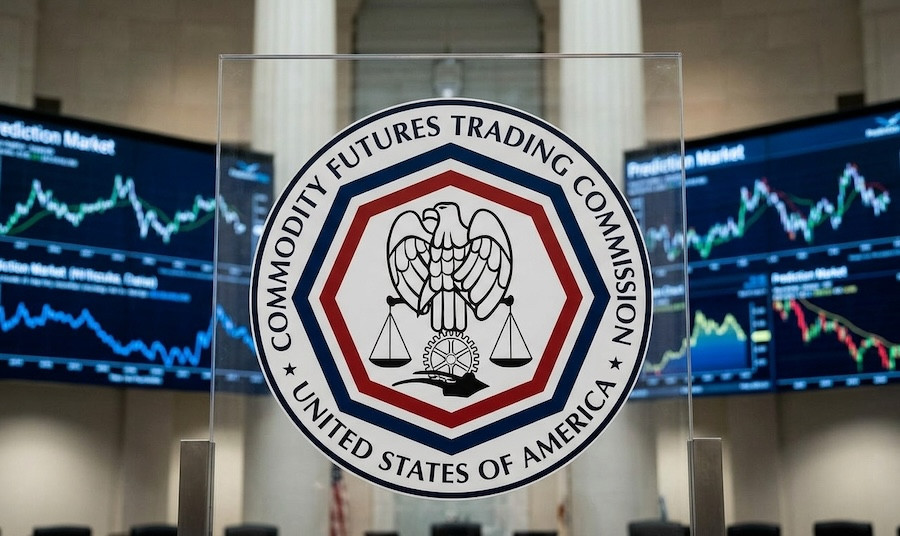
The US Commodity Futures Trading Commission (CFTC) has sued the state of Utah and its Attorney General in response to the state’s lawsuit against prediction market operator Kalshi, which Utah accused of violating its gambling laws.
The federal agency filed the challenge after Utah Attorney General Derek Brown sued Kalshi, its affiliates and two Susquehanna trading firms in state court, seeking to block Kalshi’s sports, election, politics and culture contracts in Utah and recover up to US$61.2 million. Brown argues the platform is offering gambling in a state where gambling is banned under the state constitution.

The CFTC is asking a federal court to block Utah from investigating or taking enforcement action over trading on CFTC-regulated exchanges, arguing that federal law gives the agency exclusive authority over prediction markets.
“Utah seeks to shut down prediction markets across a wide variety of markets,” CFTC Chairman Mike Selig said. Selig has previously argued that event contracts allow people to hedge risk and provide information about future events.
In August, a federal district court ruled in Utah’s favor in a separate case Kalshi brought in February. Kalshi has appealed to the Tenth Circuit, which has declined to block Utah’s enforcement while the appeal proceeds.

Utah is the 10th state the CFTC has sued over prediction markets. Federal appeals courts have issued conflicting rulings in related cases brought by Kalshi: the Ninth and Sixth Circuits sided with state regulators, while the Third Circuit sided with Kalshi.
The CFTC’s position has also been challenged by its former Chairman, Gary Gensler. In a brief to the US Supreme Court, Gensler argued that the 2010 Dodd-Frank Act, which expanded the CFTC’s authority over swaps, did not give it regulatory authority over sports betting.
Former Senator Chris Dodd, a co-author of the legislation, has filed a separate brief backing the states’ position.

The case could influence whether prediction markets can continue offering sports event contracts under federal oversight or face restrictions under state gambling laws. Kalshi CEO Tarek Mansour has said the wider dispute could ultimately reach the US Supreme Court, which has not yet agreed to hear the issue.

Dig Deeper
Related stories



The Backstory
Utah turned a local gambling fight into a federal test case
Utah’s clash with Kalshi began as a dispute over whether a federally regulated prediction market could offer event contracts in one of the nation’s strictest anti-gambling states. It has since become a broader test of how far the Commodity Futures Trading Commission’s authority extends and whether states can use gambling laws to block sports-related contracts listed on federally supervised exchanges.
The current CFTC lawsuit against Utah and Attorney General Derek Brown did not emerge in isolation. It follows months of litigation in which Kalshi argued that its contracts are financial products regulated under the Commodity Exchange Act, while Utah said the same products amount to gambling barred by the state constitution. The legal path started when Kalshi filed a preemptive federal lawsuit against Utah officials, seeking to stop what it described as an imminent enforcement campaign against its platform.
That filing put Utah in a distinct position. Kalshi had already sued several states with legal sports betting markets, including Nevada, New Jersey, Maryland, Tennessee, New York, Ohio and Connecticut. Utah was different because it has no legal sports gambling industry to protect or regulate. Its position was categorical: gambling is prohibited, and event contracts tied to sports outcomes or similar occurrences should not be available to Utah residents under a different label.
Kalshi’s federal preemption argument met an early setback
Kalshi’s core claim has been that it operates as a Designated Contract Market overseen by the CFTC and that federal law preempts state gambling enforcement against its event contracts. The company warned that allowing each state to impose its own gambling rules on prediction markets would create a fragmented national system for instruments it says trade across state lines.
Utah countered that federal commodities law did not force states to tolerate contracts they define as illegal gambling. That argument gained traction in August, when a federal district judge sided with the state. In a ruling allowing Utah to enforce gambling laws against Kalshi, District Judge Robert Shelby rejected Kalshi’s claim that federal law barred the state from acting. The court reasoned that Congress could not have intended to preserve state gambling regulation while requiring states to provide access to every event contract, including those deemed gambling under state law.
The ruling gave Utah a meaningful early advantage, though it did not end the dispute. Kalshi appealed to the 10th Circuit and sought protection from enforcement while the appeal moved forward. The company continued to press the argument that its contracts sit within a federal regulatory framework and should not be subject to state-by-state gambling prohibitions.
That attempt also fell short. In a later development, Utah prevailed when an appeals panel declined to block enforcement during Kalshi’s appeal. The panel did not decide the ultimate preemption question, but it found Kalshi had not met the standard needed for an injunction. The result kept pressure on the company while preserving the larger legal issue for review.
The state escalated with its own lawsuit
After the federal court ruling, Utah moved more aggressively. Brown sued Kalshi, its affiliates and two Susquehanna trading firms in state court, alleging the platform operated an illegal gambling business and seeking to recover substantial sums tied to Utah accounts. The state said Kalshi’s event contracts functioned as sports betting and asked a judge to block the company from offering contracts in Utah.
In Utah’s lawsuit alleging illegal gambling by Kalshi, the state estimated the company generated between $30.6 million and $61.2 million in fees from Utah accounts. It also alleged residents lost about $5.5 million on individual wagers. Brown framed the action as aimed at the company rather than customers and sought geolocation controls to keep Utah residents off the platform.
The state’s position was strengthened by Utah’s broader legislative approach. Lawmakers passed HB243, clarifying that wagers on individual actions, statistics, occurrences or non-occurrences can be treated as gambling under state law. That language targets the mechanics of event-based betting, including markets that resemble proposition bets or in-play wagers. Although traditional sportsbooks were an obvious focus, the statute also sharpened the state’s argument against prediction markets.
For Utah, the stakes are constitutional and regulatory. The state says permitting Kalshi to serve residents would undermine a blanket gambling ban and weaken its ability to police online wagering. For Kalshi, the risk is that one state’s enforcement theory could be replicated elsewhere, restricting access to sports event contracts even when offered through a federally registered exchange.
The CFTC moved from regulator to litigant
The CFTC’s decision to sue Utah represents a significant escalation because the agency is no longer merely overseeing Kalshi’s exchange status or responding to market filings. It is asserting in court that states cannot investigate or enforce gambling laws against trading on CFTC-regulated exchanges where the agency claims exclusive jurisdiction.
That posture is consistent with other recent CFTC actions. In New York, the agency took emergency action after the state sued Kalshi and sought to shut down its operations there. The commission said it had used emergency authority to protect what it described as interstate financial markets from a patchwork of state gaming laws. As detailed in the CFTC’s emergency order allowing Kalshi to keep operating in New York, Chairman Michael Selig argued that event contract exchanges are financial markets, not gaming platforms subject to state-by-state control.
The Utah suit extends that theory into a state where gambling is constitutionally banned rather than heavily regulated. That matters because the policy balance is different. New York, like many states, permits and taxes certain forms of gambling and sports betting. Utah bans gambling outright. If federal courts accept the CFTC’s argument in Utah, prediction market operators could gain a stronger path into states that have historically prohibited gambling entirely.
The agency’s stance also reflects a broader institutional claim. The CFTC argues that prediction markets can serve hedging and price-discovery functions, offering information about future events and allowing users to manage risk. States argue that sports contracts, election markets and similar products often look and function like wagers, regardless of whether they are traded on an exchange.
Conflicting rulings raise the odds of Supreme Court review
The Utah litigation sits within a fractured national legal landscape. Courts have not spoken with one voice on whether federal commodities law blocks state gambling enforcement against prediction markets. Federal appeals courts have issued conflicting decisions in related Kalshi cases, with some siding with state regulators and others siding with the company. That split increases the likelihood that the Supreme Court will eventually be asked to decide the issue.
The dispute also has drawn attention from figures tied to the law Kalshi and the CFTC rely on. Former CFTC Chairman Gary Gensler has challenged the agency’s current interpretation, arguing in a Supreme Court brief that the 2010 Dodd-Frank Act did not give the commission authority over sports betting. Former Sen. Chris Dodd, a co-author of the law, has also backed the states’ position. Their involvement underscores that the case is not only about Kalshi’s business model but also about how Congress meant to divide authority between federal financial regulators and state gambling overseers.
For prediction markets, the outcome could determine whether sports event contracts remain nationally scalable products or become unavailable in states that define them as gambling. For states, the case will test whether long-standing gambling laws can be enforced against platforms that structure wagers as exchange-traded contracts. Utah’s confrontation with Kalshi has become one of the clearest vehicles for resolving that question because it presents the issue in stark terms: federal market regulation on one side, a constitutional gambling ban on the other.