


Canadian lawmakers consider tighter sports betting advertising restrictions

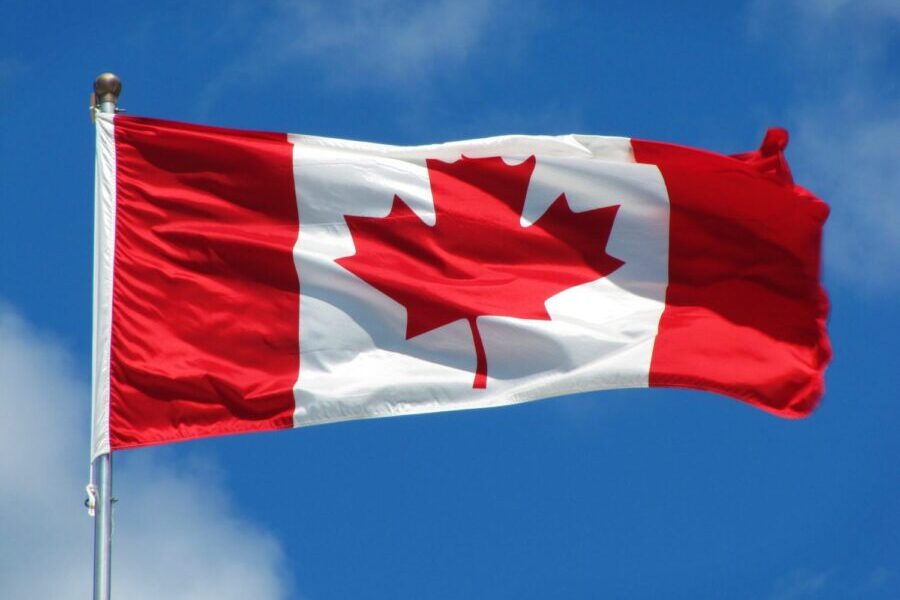
Canadian lawmakers are set to continue their consideration this week of a bill that could lead to tighter restrictions on sports betting advertising.
Bill S-211, the National Framework on Sports Betting Advertising Act, passed the Senate in October 2025 and cleared second reading in the House of Commons in April 2026 by a vote of 291-28. It is now before the House of Commons Standing Committee on Canadian Heritage.

Rather than setting specific standards, the bill would require the federal Minister of Canadian Heritage to develop a national framework for sports betting advertising. The framework could consider limits on the number, scope or location of advertisements, as well as restrictions on the use of celebrities and athletes to promote sports betting. Current rules in Canada are aimed at restricting gambling advertising that targets minors and at-risk people.
The push comes amid research into how much gambling advertising viewers are exposed to during sports broadcasts. A CBC News analysis conducted by University of Bristol researchers counted about 3,000 gambling messages across seven televised 2026 NHL playoff games featuring Canadian teams, including commercials, in-game promotions and logos on rink boards, jerseys and helmets.
University of Bristol senior lecturer Raffaello Rossi said the sample averaged two to three messages per minute, similar to a 2024 CBC Marketplace study, also conducted with Bristol researchers, which found about 2.8 per minute across seven NHL and NBA games.

Mental health groups, including the Canadian Mental Health Association and Public Health Physicians of Canada, have submitted briefs to Parliament calling for national action, citing concerns about gambling advertising’s effects on mental health and financial well-being.
The Canadian Gaming Association, however, has argued the bill is unnecessary because gambling advertising is already regulated at the provincial level. The association has also said the Alberta and Ontario governments oppose the bill in its current form.
If the bill becomes law, the minister would have one year after it comes into force to report on the framework. Any measures it identifies could affect how sports betting operators advertise in Canada, including broadcast promotions and sponsorship agreements.
Charlotte Capewell brings her passion for storytelling and expertise in writing, researching, and the gambling industry to every article she writes. Her specialties include the US gambling industry, regulator legislation, igaming, and more.

Dig Deeper
Related stories
 2026/04/23: Canada’s House of Commons advances sports betting advertising bill
 2026/08/25: Total Philippines gambling ad ban seen handing market back to illegal operators, data from five countries show
 2025/11/25: Canadian senators push for federal ban on betting ads
 2025/06/06: Canadian lawmaker relaunches effort to limit sports betting ads
2026/04/23: Canada’s House of Commons advances sports betting advertising bill
2026/08/25: Total Philippines gambling ad ban seen handing market back to illegal operators, data from five countries show
2025/11/25: Canadian senators push for federal ban on betting ads
2025/06/06: Canadian lawmaker relaunches effort to limit sports betting ads
The Backstory
From legalization to saturation concerns
Canada’s debate over sports betting advertising is the direct result of a policy shift that made single-event wagering legal in 2021 and then left most advertising controls to provinces, broadcasters and industry standards. The current bill before Parliament does not itself ban betting ads. It would require the federal heritage minister to develop a national framework that could address how many ads Canadians see, where they appear and whether athletes or celebrities can be used to sell sports betting.
That narrower design reflects the political terrain. Sports betting is legal, provinces oversee gambling models and operators already face advertising limits aimed at minors and people at risk of gambling harm. But lawmakers pressing for federal action argue that provincial rules have not kept pace with the scale of broadcast and digital promotion since Ontario opened its regulated iGaming market in 2022. Ontario’s launch gave legal operators a high-profile market in which to compete for customers, and sports broadcasts quickly became the main battleground.
The legislative push has been building for several years. Sen. Marty Deacon first pursued the measure as Bill S-269 before the parliamentary session was cut short by former Prime Minister Justin Trudeau’s resignation. She later revived the effort as Bill S-211, a move covered in the relaunch of Canada’s sports betting advertising bill. The reintroduced version kept the central idea: a federal framework rather than an immediate statutory ban, with possible limits on ad volume, placement and celebrity promotion.
A Senate effort gains House momentum
Bill S-211 moved from a recurring Senate concern to a live House of Commons issue when lawmakers voted 291-28 to send it to the Standing Committee on Canadian Heritage. That vote, described in the House advancement of the sports betting advertising bill, showed unusually broad support for further review, even though the details remain unsettled. Prime Minister Mark Carney voted in favor, giving the bill added political weight as it entered committee scrutiny.
The House version would direct the Minister of Canadian Heritage to work toward national standards and would also require the Canadian Radio-television and Telecommunications Commission to review whether its current policies adequately address harms associated with sports betting advertising. That provision matters because much of the public concern centers on televised sports, where commercials, sponsorship integrations, odds segments and arena branding can overlap into a continuous marketing environment.
Opposition has been concentrated among those who argue that gambling is already a provincial responsibility. The Canadian Gaming Association has said a federal framework is unnecessary and risks interfering with provincial models. It has also pointed to opposition from Alberta and Ontario, the two provinces most often cited in industry arguments against national intervention. Bloc Québécois lawmakers accounted for many of the votes against sending the bill to committee, reflecting concern that Ottawa could intrude on provincial jurisdiction.
The evidence fight over exposure
The political pressure has been driven less by a single ad campaign than by research suggesting betting messages are now embedded throughout live sports. A CBC Marketplace study conducted with University of Bristol researchers found sports viewers were exposed to roughly 2.8 gambling messages per minute across a sample of NHL and NBA broadcasts. More recent CBC analysis of NHL playoff games featuring Canadian teams found about 3,000 gambling messages across seven games, again averaging about two to three per minute.
Those figures have given supporters of federal rules a measurable way to describe saturation. Senators Percy Downe and Deacon escalated the issue in a letter to Carney, joined by 40 other senators, urging the government to have the CRTC ban all sports betting ads. That campaign, detailed in the senators’ call for a federal betting ad ban, framed smartphones as always-available betting portals and cast advertising as a public health risk for young and vulnerable viewers.
Industry participants counter that ad volumes have already fallen. During earlier hearings, betting industry representatives cited research from ThinkTV indicating gambling-related ads declined from 442 in 2022 to 189 in 2024. That argument cuts to the core dispute before lawmakers: whether the market and existing rules are correcting excesses or whether the combination of television exposure, sponsorship and mobile betting requires a national response. Mental health groups have urged Parliament to act, saying the consequences are not limited to problem gamblers but extend to financial stress, family harms and youth normalization of wagering.
Canada’s middle path between bans and self-regulation
Canada is not debating advertising in isolation. Other regulated markets have moved in different directions, and those experiences are shaping the stakes. Australia tightened gambling advertising through the Interactive Gambling Amendment (Gambling Reform) Act 2026, prompting criticism that regulators were treating all gambling marketing as a public health vector rather than as information that can help consumers identify legal operators. That critique was explored in an analysis of Australia’s gambling advertising reforms, which argued that advertising can signal legitimacy in online markets where fraudulent operators can mimic licensed sites.
The Philippines debate offers a sharper warning about total bans. A pending Senate proposal there would prohibit gambling advertising and sponsorship across nearly all media, while allowing licensed operators to advertise only on their own premises or platforms. An industry analysis in the review of a proposed Philippines gambling ad ban argued that such measures can unintentionally push players toward offshore sites that ignore age checks, exclusion lists, tax obligations and responsible gambling rules. The analysis cited Italy, Belgium, France, the Netherlands and the United Kingdom to argue that harsh limits on legal advertising can weaken channelization if illegal operators keep marketing.
Those international examples do not map perfectly onto Canada, where the current bill is a framework measure rather than a prohibition. Still, they explain why some lawmakers favor calibrated restrictions over an immediate ban. A national framework could target the features that most concern public health advocates, including athlete endorsements, celebrity promotions and high-frequency placement during games, without eliminating the ability of licensed operators to distinguish themselves from illegal sites.
What the committee must resolve
The Heritage Committee now sits at the intersection of consumer protection, federalism and media economics. If it endorses the bill, the minister would have one year after enactment to report on a framework. That timetable means any concrete changes to broadcast rules, sponsorship agreements or digital marketing practices would likely come later, after consultation with provinces, regulators, health groups, sports leagues, broadcasters and operators.
The committee’s task is complicated by the bill’s structure. Because it does not prescribe the final rules, supporters can treat it as a flexible response to a fast-moving market. Opponents can argue the same flexibility creates uncertainty for licensed operators, broadcasters and sports organizations that rely on sponsorship revenue. The bill also raises practical questions about how federal standards would interact with provincial advertising rules and with the CRTC’s jurisdiction over broadcasting.
The broader causality is clear: legalization expanded the market, Ontario’s launch accelerated competition, betting brands moved aggressively into sports media and public concern followed. The question before Parliament is whether Canada can reduce exposure without undermining the regulated market it created. Bill S-211 is the vehicle for that test. Its fate will determine whether sports betting advertising remains primarily a provincial and industry-regulated matter or becomes a national policy file with federal standards and direct consequences for how Canadians watch sports.
