


BetMGM boosts visibility ahead of football season with new campaign featuring Jon Hamm, upgraded sportsbook

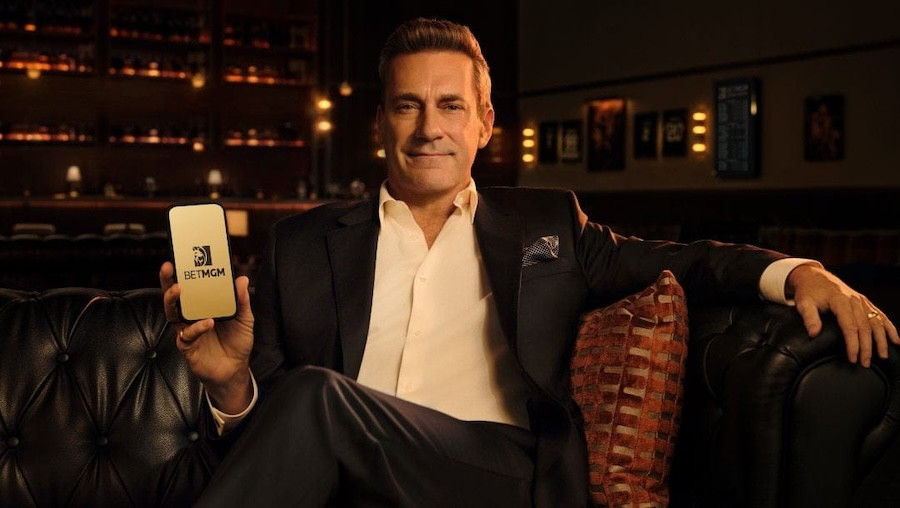
BetMGM has launched a new campaign in anticipation of football season, marking the next chapter in its “Make It Legendary” platform, collaborating with EMMY and Golden Globe Award-winning actor Jon Hamm.
The move accelerates the group’s move to bring together “sports betting, igaming, rewards, entertainment and fandom in one destination.”

Speaking of the release, BetMGM Chief Revenue Officer Matt Prevost noted, “As we enter the most exciting time of year for our players, we wanted to create a campaign that feels distinctly BetMGM while tapping into MGM Resorts’ entertainment legacy.
“With Jon’s magnetic charm and CAPE’s creative vision, ‘It Happens Here’ ties together the breadth of experiences we offer in a way that’s unmistakably BetMGM,” furthered the executive.
In the campaign, the actor anchors a series of four new multi-channel spots, introducing Legends Lounge – an immersive setting combining sportsbook and casino vibes, as well as the “excitement of a Las Vegas entertainment destination.” While the lounge was constructed for the shoot, the group notes that it “plans to bring the concept to life through future activations and experiences.”

Hamm himself noted that “The Legends Lounge is a world full of unexpected moments and memorable characters, and I enjoyed helping bring it to life for BetMGM’s new campaign. It’s clever, entertaining and a lot of fun.”
The campaign also comes as BetMGM announced a series of sportsbook enhancements for the football season, with “more ways to discover, build and manage bets,” including expanded cash out capabilities, enhanced live betting functionality, smoother bet building and a new Rewards Hub.
“As we head into football season, we’ve made significant investments across our platform to deliver a more seamless and differentiated sportsbook experience,” said Raymond Doyle, Senior Vice President of Sports, BetMGM. “From faster performance and expanded live betting capabilities to new tools that help customers make informed decisions, these enhancements are designed to keep players connected to the action throughout every stage of the game.”

Dig Deeper
Related stories
The Backstory
BetMGM’s campaign push follows a year of repositioning
BetMGM’s latest football-season campaign with Jon Hamm is less a one-off celebrity marketing play than the next step in a broader reset of the operator’s brand, product and economics. The company is trying to sharpen its identity before the most important stretch of the U.S. sports betting calendar while tying its sportsbook more closely to online casino, MGM Resorts’ hospitality network and a rewards ecosystem that can distinguish it from rivals competing on price and promotions.
The new “It Happens Here” spots build on the operator’s earlier effort to recast itself as an entertainment-led betting brand. BetMGM first introduced Hamm as the face of its “Make It Legendary” campaign, a platform created with Highdive and designed to connect the product to MGM’s Las Vegas roots. That earlier rollout framed wagering not simply as a transaction but as part of a broader entertainment experience, with television, digital, social and venue placements planned around high-profile sports programming.
The newest campaign carries that strategy into football season, when operators typically spend heavily to acquire and retain customers. But the message has changed from broad brand refresh to more explicit product integration. By presenting a “Legends Lounge” that blends sportsbook, casino and resort-style hospitality, BetMGM is signaling that its growth thesis depends on keeping players inside a connected ecosystem rather than winning short bursts of market share through bonus-led acquisition.
Losses raised the pressure to prove efficiency
The marketing push comes after a year in which BetMGM’s leadership asked investors to look past widening losses and focus on evidence of a more disciplined operating model. In February, executives said the joint venture’s losses rose to $291 million in 2024 from $97 million a year earlier, even as revenue reached $2.1 billion. Chief Executive Adam Greenblatt described the company as an “igaming juggernaut” and said 2024 had been used to rebuild momentum.
That investor message, detailed in coverage of BetMGM executives’ bullish outlook despite wider losses, is central to understanding the current campaign. BetMGM projected 2025 revenue of $2.4 billion to $2.5 billion and said it expected positive return on investment. The company also said it had refined marketing spending, directing fewer dollars toward lower-value players and focusing more on customers likely to engage across sports betting, online casino and MGM’s physical properties.
That approach helps explain why the campaign emphasizes experiences and rewards, not just odds or sign-up offers. Greenblatt told investors BetMGM was pursuing “premium mass” customers, a phrase more often associated with Macau casino segmentation than U.S. online sports betting. The idea is to target players who may bet more frequently, wager at higher average levels and respond to hospitality perks, loyalty points and integrated entertainment offerings.
The stakes are significant. U.S. sports betting is increasingly a scale business, with a small number of national brands controlling most handle. At the same time, state tax increases, intense promotional competition and maturing markets have forced operators to show a path to profitability. BetMGM’s football-season advertising therefore has to do two jobs: maintain consumer visibility in a crowded market and support management’s case that marketing can become more efficient as the brand becomes more differentiated.
Football season is becoming an entertainment arms race
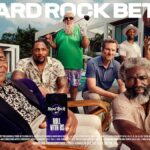
BetMGM is not alone in using the start of football season to frame sports betting as a cultural and entertainment product. Hard Rock Bet recently launched its own fall campaign, the Hard Rock Bet Party, featuring Mike Tyson, Dale Earnhardt Jr., John Daly, Ray Lewis, Ed Reed and Edgerrin James. That effort, described in coverage of Hard Rock Bet’s NFL-season marketing push, similarly translates the sportsbook experience into a physical event built around sports figures, music-adjacent branding and social content.
The parallel is instructive. As major operators converge on similar core betting functions, marketing has shifted toward immersive brand worlds. Hard Rock leans on its music and hospitality identity. BetMGM leans on Las Vegas, celebrity and MGM Resorts’ entertainment legacy. Both are trying to make their apps feel like gateways to a broader lifestyle proposition rather than interchangeable places to place a wager.
That trend reflects the realities of customer acquisition. The early years of legal online sports betting in the U.S. were dominated by bonus offers, deposit matches and aggressive state launches. As the market matures, operators are under pressure to retain existing players and increase wallet share. Football remains the largest acquisition and reactivation moment, but the economics are less forgiving. A national ad campaign must now support long-term value, cross-sell and loyalty rather than only new account growth.
BetMGM’s decision to put Hamm at the center of multiple campaign cycles also suggests a desire for continuity. Celebrity partnerships can be expensive, but recurring creative platforms may reduce the need to reinvent the brand each season. The company’s latest spots seek to make Hamm a guide through a BetMGM universe where live betting, online casino, rewards and hospitality are part of the same pitch.
Rewards have become a strategic battleground
The product upgrades accompanying BetMGM’s campaign are as important as the advertising. The company said it has enhanced cash-out capabilities, live betting functionality, bet-building tools and its Rewards Hub before football season. Those changes are designed to reduce friction, keep customers engaged during games and tie online play more directly to loyalty benefits.
Rivals are making similar moves. Hard Rock Bet recently introduced Legendary Reward Drops, an online rewards program integrated with Unity by Hard Rock. That structure allows players to earn points and tier credits across online betting and physical Hard Rock properties, with rewards including bonus bets, merchandise, concert tickets and hotel stays.
BetMGM’s comparable advantage is MGM Rewards, along with ties to MGM Resorts’ Las Vegas and regional properties and the Marriott loyalty program. Executives have repeatedly stressed the importance of omnichannel players, who wager online and also engage with casinos, hotels, restaurants and entertainment venues. In that model, a sportsbook customer is not merely a sportsbook customer; the account can become an entry point into higher-margin online casino play and real-world resort spending.
This is where BetMGM’s campaign language about one destination becomes commercially relevant. Sports betting alone can be volatile, with margins affected by game outcomes, promotional intensity and tax policy. Online casino generally offers steadier economics but remains legal in far fewer states. A loyalty-led model gives operators more ways to justify marketing spend, especially when it can be tied to measurable engagement across verticals.
Online casino remains the long-term prize
BetMGM’s emphasis on casino-style imagery is not accidental. The company has identified igaming as a core strength and said its online casino market share reached 22% in 2024. Management has also pointed to expanded game content, live-dealer products and stronger cross-sell from sports betting to casino as drivers of future growth.
The challenge is that online casino legalization has moved slowly in the U.S. Greenblatt said in February he did not expect major igaming legislation to succeed in 2025, though several states were considering it. BetMGM has been watching markets such as Maryland, Illinois and New York, while also expressing ambition in Alberta. The company’s view is that broader igaming legalization is a matter of time, but the timing remains outside operators’ control.
That uncertainty raises the importance of brand building now. If more states authorize online casino, operators with existing sportsbook databases, recognized brands and loyalty links to physical properties may be better positioned to convert sports bettors into casino players. BetMGM’s campaign, by visually collapsing the distance between sportsbook, casino lounge and resort experience, prepares consumers for that broader proposition even in markets where igaming is not yet legal.
It also allows BetMGM to argue to investors and regulators that it is building a sustainable, regulated entertainment business rather than chasing speculative betting volume. The company has highlighted responsible gambling tools such as GameSense in prior campaign materials, connecting brand growth with safer-play infrastructure. That message has become more important as lawmakers scrutinize advertising practices, tax rates and the social impact of mobile wagering.
The next test is whether brand polish converts
BetMGM enters football season with a more polished creative platform, a higher-profile celebrity partner and product changes meant to improve day-to-day betting use. The question is whether those investments produce the higher-value engagement executives have promised.
The company’s 2025 case rests on a delicate balance. It needs enough marketing to remain visible against FanDuel, DraftKings, Hard Rock Bet and other challengers, but not so much that losses widen again. It needs sports betting customers to stay active through live betting and bet-building features, then move into online casino where legal. It also needs MGM Rewards and resort access to matter in an app-driven market where many customers compare operators by pricing, promotions and ease of use.
The latest campaign is therefore best understood as a commercial bridge between BetMGM’s past and its intended future. The first Hamm-led work refreshed the brand. The investor update explained the financial discipline expected to follow. The football-season campaign now attempts to turn that positioning into customer behavior at the busiest point on the sports calendar. If it works, BetMGM can strengthen its claim that entertainment, loyalty and product depth are enough to narrow the gap with larger sportsbook rivals while protecting its lead in igaming.
