


bet365 expands US presence with West Virginia entry

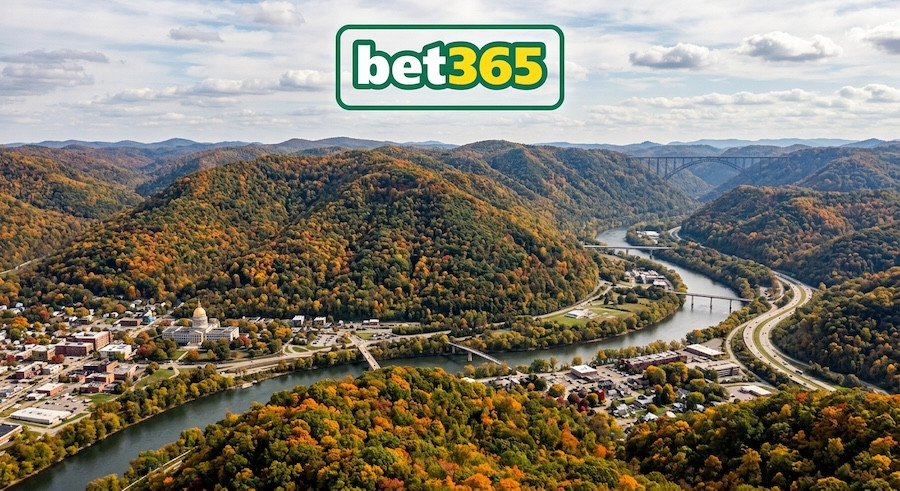
Global online gaming operator bet365 has expanded its presence in the United States after entering West Virginia, marking the 18th US state in which it operates.
The group will launch both its online casino and sportsbook in the state.

According to bet365, players in the state will be able to access a range of its sports betting features, including its early payout offer, and its vast selection of online casino titles and features, such as its free-to-play game, Daily Prize Matcher.
The entry into West Virginia comes just before the start of the NFL season, for which bet365 explains that players will be able to take advantage of its many betting markets surrounding the sport, as well as live betting and in-game features available during the season.
“West Virginia represents another important step in bet365’s continued expansion across North America,” commented Trip Stoddard, Head of Development at bet365. “As we grow our presence across the region, our focus remains on bringing customers the quality, depth and functionality that define the bet365 platform. With football season just around the corner, it’s an exciting time to introduce our sportsbook and casino offerings to customers across the state.”

bet365 described its entry into West Virginia as strategic, adding that it aligns with its goals to enter mature regulated markets.
West Virginia opened its regulated online gambling market in 2020. According to figures published by the West Virginia Lottery, gross gaming revenue hit US$36.4 million in July, a 24.7% increase compared to the previous year’s total of US$29.2 million.
West Virginia isn’t the only recent market in which bet365 has entered. Last month, it also expanded into Alberta, going live when the Canadian province’s regulated market launched on 13 July.
Charlotte Capewell brings her passion for storytelling and expertise in writing, researching, and the gambling industry to every article she writes. Her specialties include the US gambling industry, regulator legislation, igaming, and more.

Dig Deeper
Related stories
 2026/02/17: Wazdan expands presence in West Virginia with Fanatics Casino
2026/06/03: 1X2 Network launches in West Virginia with Caesars, Fanatics, and Rush Street Interactive
2026/02/17: Wazdan expands presence in West Virginia with Fanatics Casino
2026/06/03: 1X2 Network launches in West Virginia with Caesars, Fanatics, and Rush Street Interactive
 2025/08/25: SlotMatrix expands Wild Extravaganza slot to West Virginia
 2025/10/28: Bragg Gaming Group expands West Virginia presence with Internet Vikings collaboration
2026/02/17: Wazdan expands presence in West Virginia with Fanatics Casino
2026/06/03: 1X2 Network launches in West Virginia with Caesars, Fanatics, and Rush Street Interactive
2025/08/25: SlotMatrix expands Wild Extravaganza slot to West Virginia
2025/10/28: Bragg Gaming Group expands West Virginia presence with Internet Vikings collaboration
The Backstory
West Virginia becomes a bigger test of scale
Bet365’s move into West Virginia puts the operator into one of the smaller but more strategically useful U.S. online gambling markets. The state offers both online sports betting and internet casino gambling, giving operators a combined product opportunity that remains unavailable in most U.S. jurisdictions. For a global brand still building its American footprint, that matters as much as the size of the market.
West Virginia opened online casino gambling in 2020, joining a limited group of states that allow digital slots, table games and live-dealer products alongside mobile sports wagering. The dual market structure has made it attractive to operators and suppliers looking for regulated expansion without waiting for larger states to authorize igaming. Bet365’s entry, timed before the NFL season, reflects the same logic: use sports betting’s peak acquisition period to introduce a broader casino product that can generate activity beyond game days.
The launch also comes as West Virginia is producing stronger revenue figures. The West Virginia Lottery reported $36.4 million in gross gaming revenue in July, up 24.7% from $29.2 million a year earlier. That growth helps explain why a mature but modest state has become a focus for international operators, content studios, aggregators and infrastructure providers seeking U.S. growth under established rules.
Suppliers have moved ahead of operators
Before bet365’s arrival, the West Virginia market had already seen a steady buildout of casino content through existing operators. That supplier activity has helped deepen the state’s product base and made new operator launches more competitive from day one. It also shows how West Virginia has become a practical proving ground for companies seeking to expand beyond the largest U.S. igaming states.
Wazdan recently expanded in West Virginia through Fanatics Casino, adding 15 titles to the platform after previously debuting in the state with Caesars Entertainment. The deal followed Wazdan’s broader pattern of working with Fanatics across multiple regulated states, including New Jersey, Michigan and Pennsylvania. For suppliers, those multistate operator relationships can reduce the friction of entering additional jurisdictions once licensing and technical requirements are met.
1X2 Network followed a similar path when it launched in West Virginia with Caesars, Fanatics and Rush Street Interactive. The rollout marked its second regulated U.S. market after Michigan and included titles such as 3 Hot Chilli Peppers and 3 Porky Banks Hold and Win. The company also signaled plans to add more games and operators in the state, while identifying New Jersey, Connecticut and Alberta as potential future markets.
Those launches are important context for bet365 because casino depth is increasingly central to U.S. market competition. Sportsbooks may acquire customers during football season, but casino catalogs, promotional tools and game variety can influence retention and margins. In states where online casino is legal, the sportsbook is often only one part of the revenue mix.
Content depth is becoming a competitive lever
The recent sequence of West Virginia launches also shows a shift from basic market access to product differentiation. Operators are no longer competing only on sign-up offers or recognizable brands. They are adding exclusive titles, specialty mechanics, aggregation tools and promotional features to keep players active across multiple sessions.
AGS Interactive’s launch with Betly in West Virginia added the developer’s full digital casino catalog to the Delaware North-owned platform. Titles such as Rakin’ Bacon and 3x Ultra Diamond expanded Betly’s slot lineup and reinforced the role of proprietary and recognizable games in a regulated market. AGS framed the launch as part of a broader push into U.S. jurisdictions where online casino is permitted.
SlotMatrix, the aggregation arm of EveryMatrix, also brought its Wild Extravaganza slot to West Virginia after releasing the game in New Jersey and Michigan. The rollout was more than a single-title launch. It highlighted the use of engagement tools such as free spins, leaderboards and tournaments, which are increasingly part of the casino retention strategy in regulated markets.
For bet365, those developments raise the bar. The company is entering a market where players already have access to established casino brands and a growing range of suppliers. Its advantage rests on the strength of its global platform, breadth of betting markets, live wagering features and integrated casino experience. But West Virginia’s supplier activity suggests consumers will expect a deep game library from the start, not a phased or limited offering.
Infrastructure has followed regulatory demand
Behind the visible expansion of games and operators is a less visible buildout of technical infrastructure. U.S. igaming regulation is state-based, and many jurisdictions require in-state systems, data controls or approved operational environments. That creates a parallel market for hosting, disaster recovery and compliance services as suppliers and operators scale across states.
Bragg Gaming’s recent West Virginia collaboration with Internet Vikings illustrates that layer of market development. Internet Vikings agreed to provide Bragg with two in-state data center environments, including a primary site and a disaster recovery site designed for immediate activation if needed. The arrangement built on earlier work between the companies in New Jersey and Pennsylvania.
That type of infrastructure investment signals confidence in the durability of the market. Companies do not add compliant hosting and redundancy only for short-term promotional campaigns. They do it to support ongoing content distribution, uptime requirements and regulatory obligations. As more suppliers enter West Virginia, these operational foundations become critical to ensuring that games, payments, account systems and promotional tools function consistently.
Bet365, as a large international operator, brings its own technology standards and product expectations. But in the U.S., each state still requires specific approvals, integrations and compliance controls. West Virginia’s established infrastructure ecosystem may make it a more accessible jurisdiction for expansion than a newly opened market, even if the revenue pool is smaller than in states such as Michigan, New Jersey or Pennsylvania.
North American ambitions are converging
Bet365’s West Virginia launch is part of a broader North American expansion strategy rather than an isolated state entry. The operator also recently entered Alberta, a Canadian province that opened its regulated online gambling market in July. Together, those moves point to a disciplined expansion model focused on regulated markets where the company can deploy both sportsbook and casino products.
West Virginia’s appeal is tied to timing as well as regulation. Launching before the NFL season gives bet365 access to the most important sports betting period in the U.S. calendar. Football can drive account creation, deposits and brand sampling, while the casino product can help maintain engagement between games and after the season’s peak weekends. That combination is especially valuable in states where online casino is legal and can generate higher frequency play than sports betting alone.
The state also offers a competitive snapshot of where U.S. igaming is heading. Fanatics, Caesars, Rush Street, Betly and other platforms have been adding supplier content. Developers and aggregators are using West Virginia to extend multistate partnerships. Infrastructure companies are building the compliance backbone needed for continued growth. Bet365 enters that environment as a late but significant addition, bringing another major brand into an increasingly crowded market.
The stakes extend beyond West Virginia’s borders. Success in the state can support bet365’s case for further U.S. expansion, particularly in jurisdictions that combine sports betting with casino or may do so in the future. For suppliers already active there, another major operator could create new distribution opportunities. For rivals, it adds pressure in a market that has become more sophisticated since its 2020 opening.
In that sense, West Virginia is not merely bet365’s 18th U.S. state. It is a test of whether the operator can translate its global product depth into a state-level U.S. market where casino content, football-season acquisition, regulatory execution and operational reliability are all moving at once.
