


Australia to ban foreign-matched lotteries and online keno from 2027

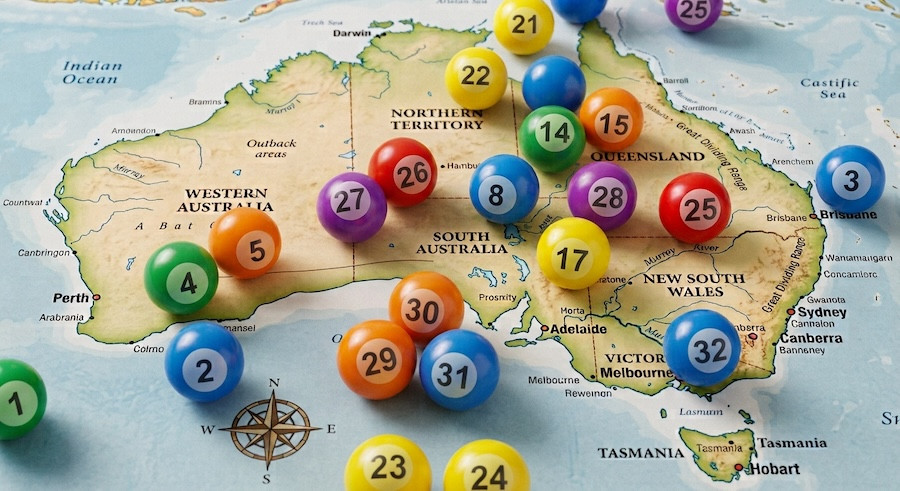
Australia’s recently passed gambling laws, the Interactive Gambling Amendment (Gambling Reform) Act 2026, will prohibit foreign-matched lotteries and online keno from 1 January, 2027, bringing both products under tighter restrictions.
The changes form part of a wider revamp of Australia’s gambling rules, with the government also introducing measures targeting online gambling. The reforms include stricter controls on gambling advertising and the further development of the country’s national self-exclusion scheme, BetStop.

Foreign-matched lotteries allow Australian customers to participate in draws held in other countries, like the US Powerball and EuroMillions. Several providers currently offer these services under licenses issued in the Northern Territory.
According to Lottery Daily, the Lottery Office – one of four businesses offering foreign-matched lottery draws – has opposed the change, saying the decision would restrict the options available to consumers, questioning its connection to reducing gambling harm.
The Lottery Office will continue providing the service until the legislation comes into effect next year.

In contrast, the Lottery Corporation, Australia’s largest lottery company, has welcomed the move. The group’s CEO Wayne Pickup reportedly said, “Australia’s lottery market is regulated by design to protect consumers, to safeguard integrity and to return money to the community. A licensed lottery operator carries real obligations: responsible gaming, security, auditing, probity, guaranteed prize funding and public returns. That is the price of a license, and it is why people trust a lottery ticket.”
Online keno will also be removed from the market under the legislation but Keno offered in licensed physical venues will continue.
“The full year impact of discontinuing online Keno for us would be circa AU$25 million (US$18 million)1 AUD = 0.7133 USD
2026-09-02Powered by CMG CurrenShift of EBITDA based on FY26,” indicated Pickup. “Our response is to double down on Keno in licensed venues. We have longstanding relationships with venues and we’re well and truly embedded in the eastern seaboard pub and club ecosystem,” furthered the lottery executive.
Charlotte Capewell brings her passion for storytelling and expertise in writing, researching, and the gambling industry to every article she writes. Her specialties include the US gambling industry, regulator legislation, igaming, and more.

Dig Deeper
Related stories
 2025/03/07: Caesars Digital launches Pixiu Gaming’s Keno title
 2026/08/25: Total Philippines gambling ad ban seen handing market back to illegal operators, data from five countries show
 2025/10/10: Keno added to licensing regime in Colombia
 2025/07/22: Scientific Games adds Pixiu Gaming to ilottery content hub
2025/03/07: Caesars Digital launches Pixiu Gaming’s Keno title
2026/08/25: Total Philippines gambling ad ban seen handing market back to illegal operators, data from five countries show
2025/10/10: Keno added to licensing regime in Colombia
2025/07/22: Scientific Games adds Pixiu Gaming to ilottery content hub
The Backstory
Australia draws a line around digital lottery products
Australia’s move to ban foreign-matched lotteries and online keno from Jan. 1, 2027, marks a sharper intervention in a market that had grown around gaps in the country’s gambling framework. The Interactive Gambling Amendment (Gambling Reform) Act 2026 brings those products into the center of national policy after years in which digital distribution, offshore prize pools and state-based licensing arrangements complicated the boundary between lottery, wagering and online casino-style play.
The legislation affects two distinct products. Foreign-matched lotteries give Australian customers exposure to overseas draws such as the U.S. Powerball and EuroMillions without buying a ticket directly in those jurisdictions. Online keno, meanwhile, translates a venue-based game into remote play. Both have been legal in parts of the market through Northern Territory licensing, but Canberra’s latest reforms signal that legality under a territorial license is no longer enough when products are viewed as inconsistent with national consumer-protection goals.
The change also lands as Australia is tightening a broader set of online gambling controls, including advertising restrictions and further development of BetStop, the national self-exclusion register. That places lotteries and keno within the same policy debate that has reshaped sports betting and online wagering: how to preserve regulated gambling channels while reducing products that regulators believe carry elevated harm or integrity risks.
The Lottery Corporation gains a clearer field
The biggest commercial beneficiary is likely to be The Lottery Corporation, Australia’s dominant lottery operator. The company has welcomed the ban, arguing that licensed lottery operators carry obligations on responsible gambling, auditing, prize funding and community returns that foreign-matched lottery providers do not meet in the same way. The position is consistent with the company’s long-standing defense of Australia’s lottery model as a tightly regulated public-interest market rather than a free-for-all digital product category.
The timing is notable because The Lottery Corporation is also undergoing a leadership transition. In March, the company named Wayne Pickup, then chief executive of Allwyn North America, as its incoming managing director and CEO. As reported in Wayne Pickup’s appointment to lead The Lottery Corporation, he was scheduled to take over on Nov. 24, 2025, after Sue van der Merwe’s retirement. Pickup arrived with 25 years of lottery experience, including leadership roles at Lotto New Zealand and Allwyn North America.
That background matters because the new law creates both protection and pressure. The ban removes a category of rivals from the Australian digital lottery market, but it also eliminates online keno revenue. Pickup has said the full-year impact of discontinuing online keno would be about AU$25 million in EBITDA based on fiscal 2026. The company’s answer is to lean harder into keno in licensed physical venues, particularly pubs and clubs along the eastern seaboard where the group already has entrenched relationships.
The policy therefore does not simply favor the incumbent. It reshapes the channels through which the incumbent can grow. Traditional lotteries remain protected by licensing and public-return obligations, while keno is pushed back toward physical venues. For The Lottery Corporation, the challenge is to turn regulatory certainty into retail and digital lottery growth without relying on remote keno as an earnings contributor.
Keno’s mixed global trajectory
Australia’s retreat from online keno contrasts with developments elsewhere, where regulators have added keno to licensing frameworks rather than removing it from digital or distributed channels. Colombia offers the clearest counterpoint. Coljuegos, the Colombian gambling regulator, awarded a concession for keno expected to generate more than COP485 billion for the health care system over five years. The rollout, described in Colombia’s decision to add keno to its licensing regime, is scheduled to begin in January 2026 across four regions with more than 16,000 sales terminals.
Colombia’s model frames keno as a regulated lottery-style product that can expand the legal gambling offer and support public finances. It also plans to use blockchain technology for ticket issuance, with the stated aim of improving transparency and security. Australia is moving in the opposite direction for online keno, preserving the game in licensed physical venues while deciding that remote distribution should be removed from the market.
The contrast shows that the regulatory question is less about keno itself than the channel in which it is offered. Venue-based keno is familiar to Australian regulators and embedded in pub and club environments. Online keno collapses the distance between draw frequency, account-based play and 24-hour access. That makes it more likely to be assessed alongside other digital gambling products rather than traditional lottery games.
International suppliers have continued to treat keno as adaptable content for regulated digital markets. Caesars Digital recently introduced a branded version of Pixiu Gaming’s keno title in New Jersey and Ontario, as covered in Caesars Digital’s launch of Pixiu Gaming’s keno product. The game sits inside licensed online casino platforms, showing how keno mechanics can be absorbed into broader igaming portfolios where online casino is legal. Australia’s new law rejects that convergence in its domestic market.
Digital lottery suppliers keep expanding abroad
While Australia narrows the scope for certain digital lottery-adjacent products, suppliers serving regulated lotteries are moving in the other direction globally. Scientific Games has added Pixiu Gaming to its SG Content Hub, broadening the range of ilottery content available to government-regulated lotteries. The partnership, detailed in Scientific Games’ addition of Pixiu Gaming to its ilottery content hub, includes plans for Monopoly and Battleship games through Scientific Games’ Hasbro relationship.
That development underscores a central tension in lottery policy. Governments increasingly want modern digital products that can retain players inside regulated channels, but they also want to avoid blurring lotteries with faster-paced casino-style play. Branded ilottery games, instant-win mechanics and keno products can generate revenue and attract younger digital consumers. They also require tighter controls on marketing, game design, data use and responsible gambling tools.
Scientific Games’ content hub is aimed at government-regulated lotteries, a category that typically operates under public mandates and strict procurement rules. Pixiu, founded in London in 2014, is best known for keno offerings in North American markets. Its expansion through Scientific Games and Caesars illustrates how specialist game studios can reach regulated markets through large distribution partners rather than direct consumer acquisition.
Australia’s ban does not stop that global trend, but it limits which forms can be offered domestically. The country is not rejecting digital lottery innovation outright. Rather, it is distinguishing between official lottery products operating inside Australia’s public-return model and products that replicate external draws or move venue-based games online under separate licensing arrangements.
Advertising, channelization and the illegal-market risk
The Australian reforms also sit within a larger international debate over whether tighter restrictions push gambling activity into safer channels or drive customers toward unlicensed operators. That issue has been prominent in the Philippines, where policymakers have considered a total gambling advertising ban. A detailed analysis of that proposal warned that broad prohibitions can weaken licensed operators while leaving offshore sites free to keep marketing, as explained in the review of illegal-market risks from a Philippines gambling ad ban.
The relevance to Australia is indirect but important. Foreign-matched lottery providers argue that banning their products will reduce consumer choice and may not have a clear link to harm reduction. Regulators and incumbents counter that official lottery licensees carry obligations that protect players and return money to the community. The policy bet is that consumers will migrate to licensed domestic lottery products rather than seek offshore substitutes.
That outcome depends on enforcement and substitution. If customers who previously bought foreign-matched lottery exposure shift to Australian lottery games, the law strengthens the domestic regulated model. If they instead search for offshore sites offering access to international draws, the state may lose visibility. The same is true of online keno: removing licensed remote play may reduce access, but it also creates an opening for unlicensed operators if demand persists.
Australia has stronger enforcement capacity and a more mature gambling framework than many markets, but digital gambling is rarely contained by borders. The success of the 2027 ban will depend on how effectively regulators block illegal offers, how clearly licensed operators communicate lawful alternatives and whether product restrictions are matched by consumer education.
The stakes for 2027
By setting a delayed start date, lawmakers have given operators time to adjust contracts, technology and customer communications before the ban takes effect. The Lottery Office and other providers of foreign-matched lottery products can continue until then, but their Australian business model now has an end date. For The Lottery Corporation, the period before 2027 is a chance to consolidate its position while managing the earnings loss from online keno.
The broader stake is the shape of Australia’s lottery market. The reforms favor a model in which lottery gambling is licensed domestically, tied to public returns and separated from online casino-style expansion. They also reinforce a policy preference for venue-based keno over remote access. That approach may reduce some regulatory risks, but it will be tested by consumer behavior in a digital market where overseas products remain visible.
Australia is not alone in reassessing how lottery products should evolve online. Colombia is expanding keno under a national concession, North American operators are adding branded keno to online casino platforms and suppliers such as Scientific Games are building digital content pipelines for regulated lotteries. Australia has chosen a narrower path. From 2027, the question will be whether that path strengthens the regulated market or leaves unmet demand for others to capture.
