
Albanese holds firm as Australian MPs push for gambling advertising ban

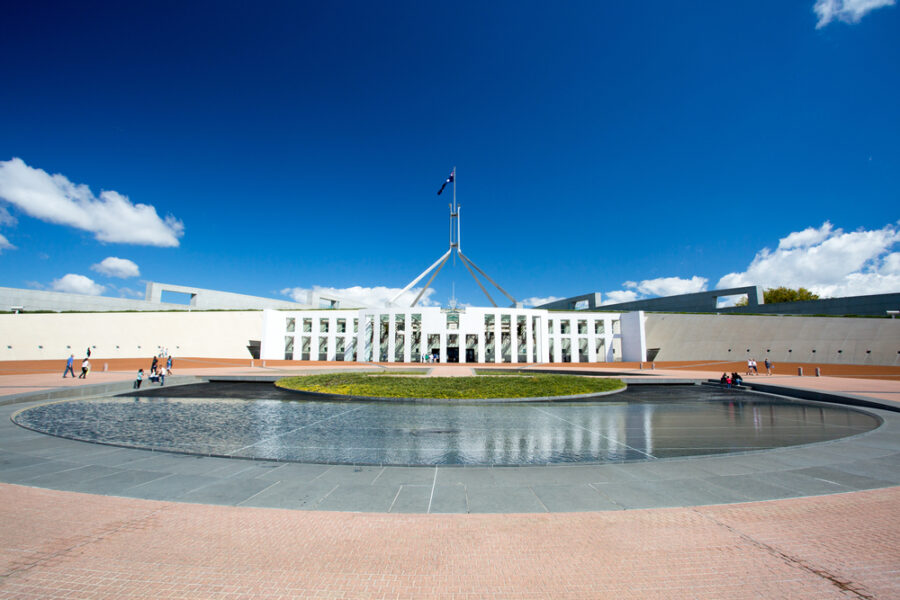
Australian Prime Minister Anthony Albanese this week faced renewed pressure from MPs to phase out gambling advertising.
However, Australia is set to close 2025 without responding to the You Win Some, You Lose More report, which delivered 31 recommendations in 2023 under the late Labor MP Peta Murphy.

The proposal for a three-year ban on gambling advertising has become the central political flashpoint, but the government is still refusing to shift its position.
Independent MP Andrew Wilkie attempted to secure a free vote on the issue, tabling a motion on Wednesday that was defeated 85 to 14.
“There is an urgent need for this parliament to decide on whether or not to allow individual members to exercise their personal judgment informed by their communities on the matter of whether or not there be a free vote … on a phase-out of gambling advertising,” Wilkie said.

He later said crossbench MPs simply wanted Murphy’s main recommendation adopted. Some are in support of significant restrictions. However, others are expecting the final policy may fall short of the recommendations.
Communications Minister Annika Wells has held preliminary discussions with stakeholders, but no reforms have been announced. Albanese told parliament his caucus would determine the government’s position, citing achievements such as the BetStop self-exclusion register.
Abi Bray brings strong researching skills to the forefront of all of her writing, whether it’s the newest slots, industry trends or the ever changing legislation across the U.S, Asia and Australia, she maintains a keen eye for detail and a passion for reporting.

Verticals:
Sectors:
Topics:
Dig Deeper
Related stories
 2025/09/01: Australian cricketer Khawaja criticizes government gambling ad ban delay
 2025/11/20: Australian government urged to follow through with gambling ad ban
 2025/08/29: Australian PM says gambling ad ban would be hard to enforce
 2025/04/16: Australian politicians gifted AU$245,000 worth of sports tickets while mulling ban on online sports betting ads
2025/09/01: Australian cricketer Khawaja criticizes government gambling ad ban delay
2025/11/20: Australian government urged to follow through with gambling ad ban
2025/08/29: Australian PM says gambling ad ban would be hard to enforce
2025/04/16: Australian politicians gifted AU$245,000 worth of sports tickets while mulling ban on online sports betting ads
The Backstory
Why the advertising fight is back on the agenda
Pressure on Australia’s government to curb gambling advertising has intensified as lawmakers, athletes and reform advocates accuse Prime Minister Anthony Albanese of running down the clock on a signature harm-reduction proposal. The renewed push comes nearly two years after a landmark parliamentary inquiry led by the late Labor MP Peta Murphy recommended phasing in a total ad ban over three years. Since then, the government has signaled sympathy for tighter rules but balked at endorsing a full prohibition, citing enforcement, funding and illicit market concerns.
In recent weeks, the political calculus shifted again. Crossbenchers sought to force a parliamentary reckoning and public figures added moral pressure, while signals from within Labor suggested an internal tussle over scope and timing. Meanwhile, the advertising landscape has kept evolving, with wagering brands adapting to partial curbs and critics warning that carve-outs and delays entrench the link between sport and betting.
The Murphy blueprint and political hesitation
The starting point remains the Murphy inquiry’s “You Win Some, You Lose More” report, which laid out 31 recommendations, including a staged ban on ads after a three-year transition. Advocates argue the blueprint was designed to give broadcasters, codes and bookmakers time to adjust their business models while reducing harm, especially to minors. Yet the government has not issued a formal response, and internal deliberations have stretched across budget cycles and party forums.
Athletes have tried to fill the vacuum with public advocacy. Australian cricketer Usman Khawaja called the government “100% too slow” and urged an immediate break between sports and wagering promotions, saying young fans are saturated with odds and brand cues. His appearance alongside crossbench MPs and public health experts underscored a growing front that frames the issue as a children’s health question as much as a consumer protection one.
Inside the government, Communications Minister Annika Wells has reopened talks with industry after earlier legislation was pulled amid pushback from broadcasters, codes and bookmakers. Expectations for a bill have slid, and stakeholders are bracing for a compromise that could land short of the Murphy plan’s centerpiece.
Claims of a retreat — and the counterarguments
Signals of a softer approach intensified with reports that Labor may resist a sweeping online ad ban, citing other measures such as a proposed under-16s social media prohibition to reduce exposure. Advocates, however, warn that children still watch sports live and in venues. Crossbenchers and campaigners pressed the government to follow through, with some warning any model short of a full phaseout would perpetuate harm. The Greens flagged a new Senate inquiry to keep scrutiny high, and independents said only a total ban would meet the moment.
Albanese has positioned enforcement practicality at the center of his case for caution. In a televised interview, the prime minister said a blanket prohibition would be difficult to police and risk pushing gamblers to offshore platforms, undermining consumer protections and tax revenue. He emphasized the danger of activity migrating to illegal sites and raised the funding implications for sports and media that rely on wagering advertising. The government has signaled it will put forward measures to address harm but has not committed to the full Murphy timetable.
The enforcement argument has rallied industry figures but galvanized critics who see the offshore threat as manageable with tougher payment blocking, ISP disruption and targeted enforcement. Reformers also point to breaches and workarounds under partial rules, citing instances where brands shift tactics rather than reduce exposure.
Money, influence and the optics problem
The political optics have grown more complicated. A Reuters analysis of public disclosures found federal politicians received hundreds of sports tickets while weighing restrictions on betting ads. Lawmakers accepted AU$245,000 worth of seats over a 21‑month span, including AU$29,000 for the prime minister. The gifts were lawful and disclosed, but critics said the “soft diplomacy” highlighted the reach of stakeholders that stand to lose revenue under a ban.
The lobbying campaign has been equally visible. Responsible Wagering Australia has argued that keeping legal products “visible” helps steer consumers to regulated operators. Meetings between lobbyists and staffers have continued as the policy is shaped. For reformers, the episode illustrates why a clear, staged timetable is necessary; for industry, it underlines the commercial disruption a sudden ban would trigger across broadcast and professional codes.
A shifting ad ecosystem
Even without a blanket ban, the rules of engagement are changing. Athletes can no longer appear in advertisements in some jurisdictions, and broadcasters have pulled certain in-game promos. Yet the line between live broadcasting, league-owned channels and digital ecosystems remains porous. Sportsbet faced criticism for promoting same-game multis on the AFL website after similar ads were dropped from live telecasts, prompting advocates to accuse regulators of letting branding migrate rather than disappear.
Communications officials have tried to steer industry toward a harmonized standard across TV, streaming and team-owned platforms. But with each carve-out, reformers warn, the sector finds new inventory, from shoulder programming and social feeds to in-stadium signage that reaches broadcast audiences. The government’s challenge is to write a rule set that is both comprehensive and enforceable across a hybrid media market.
Global echoes and the stakes at home
Australia is not alone. Canadian senators have urged a federal ban on sports betting ads, citing a surge in exposure since single-event wagering was legalized and evidence that fans encounter betting messages several times a minute during broadcasts. Ottawa has tightened some standards, including limiting athlete endorsements, but pressure is building for broader curbs. The overseas debate mirrors Australia’s balance: curtailing harm without losing regulatory grip to unlicensed operators.
At home, the stakes run from family finances to the future economics of sport. Broadcasters and codes warn that a sudden revenue shock would force cuts or higher consumer prices. Public health experts counter that addiction, debt and related harms are already imposing hidden costs on households and services. The core policy choice is whether to move now on a full phaseout, banking on a managed transition, or to keep calibrating targeted restrictions while betting that enforcement tools can hold the illegal market at bay.
As parliament grapples with the next steps, the fault lines are clear. Advocates want the Murphy framework adopted largely intact. The government is weighing a compromise shaped by enforcement realities and media economics. With athletes, crossbenchers and campaigners keeping up the pressure — and with industry adapting to each new boundary — the decision will set the tone for how Australia separates sport from gambling in the years ahead.

