

Acquisition of Mindway AI pays off for Better Collective

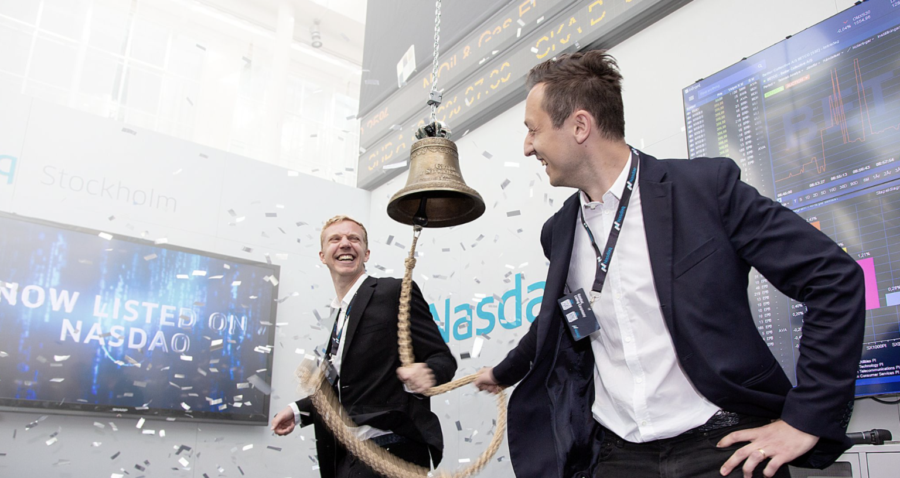
The acquisition of Mindway AI has paid dividends for Better Collective.
Mindway AI, a safer gambling software company, has expanded its presence from 62 to 73 jurisdictions, secured new commercial partnerships and now supports operators in monitoring 16.5 million players each month.
“Through our investment, strategic support and introductions to partners across our network, we have helped Mindway AI expand its business internationally,” Better Collective Co-Founder and Co-CEO Jesper Søgaard said in a statement. “The world-class team at Mindway AI has developed leading player protection solutions and brought them to a growing number of operators and markets. Its expanding reach and partnerships with major operators reflect both the strength of the team and rising demand for effective player protection.”
Since acquiring majority ownership in Mindway AI in 2021, Better Collective has supported the company’s strategic scaling, enabling it to evolve into an international leader in safer gambling technology. Combining neuroscience, AI and expert human assessments, Mindway AI develops software that detects early signs of risky gambling behavior and translates them into clear and actionable insights, enabling operators to understand customer risk and take timely and informed action. Through this approach, Mindway AI continues to make a significant impact on the global safer gambling ecosystem while delivering strong financial and operational momentum.
Mindway AI’s flagship product, GameScanner, which empowers operators to proactively detect early signs of potentially harmful gambling behavior, now monitors 16.5 million active players monthly across 73 jurisdictions. This represents a 79% increase in monitored players compared to the figure reported by Better Collective in its May 2025 press release on Mindway AI’s growing safer gambling footprint.

GameScanner monitored 9.2 million players across 62 jurisdictions. Since 2021, GameScanner has expanded significantly from monitoring 125,000 players across three jurisdictions.
The rapid adoption of the solution has translated into a compounded annual revenue growth rate of 47% from 2021 to 2025. The positive momentum has continued into 2026. As of June, Mindway AI’s signed annual recurring revenue reached 325% of the level a year earlier, reflecting growing demand for its solutions and an expanding base of recurring business.
“2026 has been an important year for Mindway AI, where we have successfully scaled our operations, expanded our commercial footprint, and grown the number of players monitored by GameScanner to record levels,” said Mindway AI CEO Rasmus Kjaergaard. “Our momentum proves that commercial success and industry-leading player protection go hand in hand. Moving forward, we remain focused on expanding the reach of our solutions and helping more operators elevate customer monitoring and safer gambling standards globally.”

Mindway AI also has strengthened its collaboration with DraftKings throughout 2026. After the integration of Gamalyze Casino, a gamified self-assessment card game helping players understand their gambling behavior, into DraftKings’ responsible gaming resources in January, the partnership expanded with sports-specific versions launched around the FIFA World Cup and NFL season. These include Gamalyze Football and Gamalyze American Football, extending the reach of Mindway AI’s technology across digital platforms and on-site activations in the US.
In June, Better Collective introduced Gamalyze Football across several of its major sports betting media brands, including Action Network, in addition to its previous casino-focused version.
Mindway AI has also expanded its commercial partnerships with operators and technology providers in 2026, including Amelco, Gaming1 and Super Technologies, alongside industry collaborations with GamScore and eyeDP, supporting wider adoption of its solutions across global markets.

Dig Deeper
Related stories
 2026/08/12: Mindway AI announces strategic partnership with GamScore
 2025/10/02: PrizePicks partners with safer gambling software supplier Mindway AI
 2026/08/25: Total Philippines gambling ad ban seen handing market back to illegal operators, data from five countries show
 2025/01/17: Flutter to sponsor Sustainable Gambling Zone at ICE Barcelona
2026/08/12: Mindway AI announces strategic partnership with GamScore
2025/10/02: PrizePicks partners with safer gambling software supplier Mindway AI
2026/08/25: Total Philippines gambling ad ban seen handing market back to illegal operators, data from five countries show
2025/01/17: Flutter to sponsor Sustainable Gambling Zone at ICE Barcelona
The Backstory
From affiliate investment to safer-gambling infrastructure
Better Collective’s 2021 move to take majority ownership of Mindway AI was more than a portfolio bet on a niche compliance supplier. It placed the sports media and affiliate group inside one of the fastest-growing parts of the regulated gambling market: technology that helps operators identify risky play before it becomes a crisis.
The payoff now being reported reflects a wider shift in gambling regulation. As online betting and casino products expand across jurisdictions, operators are under pressure to prove that growth can coexist with tighter player protections. That has turned responsible gambling tools from a reputational add-on into a commercial requirement, particularly for operators seeking licenses, entering new markets or defending existing ones.
Mindway AI’s expansion from three jurisdictions in 2021 to 73 today shows how quickly that demand has developed. Its GameScanner product, which uses behavioral data, artificial intelligence and expert review to flag early signs of potentially harmful gambling, has moved from monitoring 125,000 players to 16.5 million active players each month. That growth explains why Better Collective is now pointing to Mindway AI as evidence that player protection can generate recurring revenue as well as meet regulatory expectations.
Regulators push operators toward measurable protections
The market backdrop is increasingly clear: Governments are demanding stronger controls, while licensed operators are trying to distinguish themselves from offshore rivals that do not verify identities, honor exclusion lists or answer to regulators. That distinction has become especially important in markets where policymakers are weighing broad restrictions on gambling marketing and player acquisition.
In the Philippines, for example, a proposed total gambling advertising ban has been challenged by industry data showing that such bans can drive consumers back toward unlicensed operators. A recent analysis of the debate over a Philippines gambling ad ban and illegal-market risks argued that legal advertising, when tightly regulated, can help channel players toward licensed platforms that offer age checks, deposit limits, self-exclusion and dispute mechanisms.
That debate illustrates the commercial opening for companies such as Mindway AI. If regulators allow licensed operators to remain visible, they are also likely to demand stronger evidence that those operators can monitor harm, intervene early and document compliance. If lawmakers impose tougher restrictions, operators still need technology to show they are managing risk within narrower legal boundaries. Either path increases demand for systems that can identify problematic patterns and trigger appropriate action.
North America becomes a proving ground
Mindway AI’s commercial momentum has been reinforced by partnerships in North America, where sports betting, daily fantasy sports and emerging prediction-style products have expanded rapidly. Operators there face heightened scrutiny from state regulators, consumer advocates and lawmakers concerned about young bettors, high-frequency play and the blending of sports media with wagering.
The company’s work with DraftKings gave Mindway AI access to one of the most prominent U.S. gambling brands. In January, DraftKings added Mindway AI’s Gamalyze tool to its responsible gambling resources, giving players feedback based on behavioral indicators rather than relying only on self-reporting. The collaboration, described in a report on Mindway AI’s responsible gambling initiative with DraftKings, showed how large operators are using third-party tools to broaden their player-protection programs.
That relationship later expanded into sports-specific versions tied to major events, including football products around the FIFA World Cup and NFL season. The timing matters. Major sports events generate spikes in betting activity, marketing and customer acquisition. They also create moments when operators face the greatest need to identify rapid changes in behavior, increased spending or signs that recreational play is becoming more risky.
Mindway AI also has pushed deeper into the U.S. fantasy sports market. Its partnership with PrizePicks brought GameScanner into a platform operating in a category that often sits adjacent to sports betting in the public debate. The agreement with PrizePicks to deploy safer gambling software was framed around behavioral analytics, tailored interventions and improved customer support. It also followed PrizePicks’ iCAP accreditation from the National Council on Problem Gambling, underscoring how responsible gaming credentials are becoming part of market positioning.
Platform deals widen distribution
Mindway AI’s growth has not depended only on direct operator agreements. Partnerships with gambling technology suppliers give the company broader distribution by embedding its tools into platforms used by multiple brands. That model can accelerate adoption because operators often rely on existing platform providers to manage compliance, data flows and product integrations.
The company’s partnership with Amelco is one example. Amelco supplies trading, sportsbook and platform technology to operators and has worked with brands tied to major gambling groups. Through the Mindway AI and Amelco strategic partnership, Mindway AI positioned its responsible gambling technology as part of a broader compliance toolkit for operators working across regulated markets.
That type of integration is important because responsible gambling systems are most effective when they sit close to real-time player data. Operators need tools that can detect changes in deposit behavior, session frequency, chasing losses or other risk signals without requiring manual review of every account. Platform-level relationships can make those tools available earlier in an operator’s market launch or licensing process, reducing friction and strengthening the compliance case.
For Better Collective, these distribution partnerships also help explain the acceleration in recurring revenue. A safer-gambling vendor with one-off deployments can grow steadily, but a supplier embedded in operator platforms and compliance workflows can scale more quickly across jurisdictions. Mindway AI’s reported annual recurring revenue growth suggests that the company is benefiting from that structural advantage.
Player control becomes part of the model
The next stage in responsible gambling technology is not limited to operator surveillance. Increasingly, suppliers are trying to combine automated risk detection with tools that give players more visibility and control over their own behavior. That reflects a broader policy trend: Regulators want operators to intervene, but they also want consumers to receive clear information before harm escalates.
Mindway AI’s partnership with GamScore points in that direction. The companies said their collaboration would combine GamScore’s user-controlled financial health tracking with Mindway AI’s behavioral profiling and early detection tools. The Mindway AI and GamScore partnership aims to give operators a more complete view of player wellbeing while allowing bettors to manage and share data on their own terms.
That hybrid approach could become more important as privacy expectations rise and regulators scrutinize how gambling companies use customer data. Operators need enough information to identify risk and meet compliance duties, but players and policymakers are increasingly sensitive to opaque profiling. Tools that combine consent-based financial insights with automated monitoring may offer a path between those competing demands.
The strategic logic behind Better Collective’s acquisition is clearer in that context. Mindway AI is not simply selling a responsible gambling product; it is building infrastructure around detection, education, intervention and documentation. Those functions are becoming essential to the regulated gambling economy.
The stakes for Better Collective
Better Collective’s core business has long depended on connecting audiences with betting operators through sports media, affiliate marketing and data-driven customer acquisition. Owning a majority stake in Mindway AI gives the company exposure to the other side of the same market: the systems that help operators retain licenses, manage harm and satisfy regulators after customers arrive.
That matters as the economics of gambling marketing become more contested. Advertising restrictions, affordability checks, bonus limits and tighter enforcement can pressure affiliate revenue. A scalable safer-gambling technology business gives Better Collective a way to participate in compliance spending that may rise even when marketing budgets face political pressure.
Mindway AI’s performance also helps Better Collective address a reputational challenge facing media and affiliate companies tied to wagering. By backing player-protection technology, the company can argue that its role in the gambling ecosystem extends beyond acquisition and promotion. The commercial results now reported give that argument more weight because they show operator demand, not just corporate messaging.
The broader industry signal is straightforward: Responsible gambling has moved from the margins to the center of regulated online betting. Operators need to grow, but they also need to show they can identify risk, intervene effectively and keep vulnerable players inside systems where protections apply. Better Collective’s investment in Mindway AI is paying off because that requirement is becoming a permanent feature of the market.